by Ashley Daily
November is National Senior Pet Month, a time to recognize and celebrate our aging companions. While many people think first of dogs and cats, horses are also beloved pets whose care needs change with age — especially during the winter months.
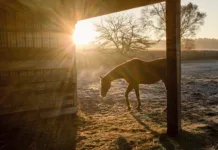
Winters in Oklahoma are generally mild, but below-freezing temperatures, ice storms and heavy snowfall aren’t unheard of. That makes it especially important to ensure senior horses are ready for the state’s unpredictable winter weather.
Logan Kembel-Whitfield, DVM, of Equine Medical Associates Inc. in Edmond, said horses should be at a healthy weight before winter arrives, and any health concerns should be addressed in advance.

“A lot of older horses have Cushing’s and maybe other health problems,” Kembel-Whitfield said. “Get those well-managed going into winter so you’re not trying to deal with multiple issues while the horse is stressed and cold.”
Aim to have your horse enter winter with a body condition score (BCS) of 5. At this score, the ribs are easily felt but not visible, the fat around the tailhead is slightly spongy, and the shoulders blend smoothly into the body. To add extra calories, a fatty oil such as soybean or flaxseed oil can be used, but check with your veterinarian about the right amount for your horse.
Powdered fat supplements are also available, but don’t overdo weight gain. Carrying too much extra weight can strain older joints, especially if horses are arthritic. Like people, a horse’s arthritis symptoms often worsen in winter. If your horse’s joints become noticeably more painful, talk with your veterinarian about adding a joint supplement.
One of the best ways to manage a senior horse’s arthritis is through exercise. If the horse is no longer ridden, aim to hand-walk him once a day to help lubricate the joints, but use caution on slick ground.
Increasing a horse’s calorie intake won’t do much good if his teeth are in poor condition. For seniors, dental exams are recommended at least once a year, and scheduling one before winter helps ensure horses can still chew hay properly. Hay digestion through microbial fermentation generates heat, essentially warming a horse from the inside like a personal space heater. But a horse with dental issues may be unable to chew and digest hay effectively, missing these benefits and facing an increased risk of choke.
If dental problems prevent a horse from eating hay, alternatives include soaked hay cubes, chopped hay and beet pulp. Kembel-Whitfield cautions, however, that beet pulp must be thoroughly soaked before feeding. “If not soaked properly, I’ve seen some bad choke and impactions from it,” she said. To prevent soaked feed from freezing, buckets can be brought inside during winter.
It might be necessary to blanket a horse once he gets older, even if he never needed one in his youth. Proper blanket fit is especially important for seniors. A blanket that is too large can pose an entanglement risk. Younger horses have been known to shred blankets if they become entangled in them, but an elderly horse can be severely injured if he gets trapped in a blanket that is too large.
If your horse has always worn a blanket, be sure to check that it still fits him before winter sets in. Musculature changes as he ages may mean he will need a different size than he previously wore. Remember to remove blankets daily to check for skin problems. A horse with Cushing’s is more prone to developing bacterial skin infections.
While Oklahoma doesn’t typically see heavy snowfall, the glare of sunlight reflecting off snow can still be harsh. For horses with cataracts, that brightness can be especially uncomfortable. Outfitting them with UV-blocking fly masks provides the same glare-reducing benefits that sunglasses offer people.
Ensuring all horses have access to flowing water is essential, but owners should use caution with tank heaters. If a heater shorts out, it can electrify the water, giving a horse a shock when he drinks. Afterward, the horse may avoid the water, increasing the risk of dehydration and colic.
Horses should also always have access to shelter. If younger horses in the herd are bullying a senior out of a run-in shed, it may be necessary to give the older horse his own area. Alternatively, moving the aggressive horse to a separate space can prevent him from bullying others and ensure all horses have access to resources.
Kembel-Whitfield adds that preparation is key when it comes to caring for equine seniors in the winter. “Be prepared ahead of time so that you’re not making big changes as we’re dealing with snow and ice on the ground,” she said. “Set them up for success months in advance before it gets cold.”
Winter weather can be tough on senior horses, but with thoughtful preparation, owners can help their senior citizens welcome spring in the best possible health.
Sidebar
Care Notes: Quick Winter Tips for Senior Horses
Keep weight steady
BCS of 5; add oils or supplements if needed.
Check teeth
Annual dental exams; provide soaked hay or beet pulp if needed.
Protect joints
Hand-walk daily; consider joint supplements.
Protect eyes
Use UV-blocking fly masks to reduce glare, especially for horses with cataracts.
Blanket smart
Ensure proper fit; check daily for skin issues.
Safe water and shelter
Ensure flowing water; use caution with tank heaters; separate bullied seniors if needed.