Supporting Oklahoma’s at-risk horses through adoption and care organizations
by Ashley Daily
May is Adopt a Horse Month, a campaign introduced by the ASPCA in 2021 to promote equine adoption and help connect at-risk horses with loving owners. In 2023, 400 equines were adopted across the country during the campaign. Today, Adopt a Horse Month continues to grow in popularity and increase interest in adoptable equines.
Oklahoma ranks among the top five states for horse population, with roughly 250,000 to 300,000 equine residents. Yet despite this high ranking, the state faces a critical need for equine welfare resources. A 2018 study found that approximately 5,000 horses entered rescues over a six-month period, many of them seized by law enforcement. Fortunately, dedicated rescues work tirelessly to provide these horses a safe place to land until they can find new homes.
Nexus Equine, nestled on 160 acres in El Reno, has aided over 1,893 horses since opening in 2016. In addition to equine adoptions, the organization has expanded with Nexus Animals, offering adoption and support for other pets.
A major goal of Nexus is to fill gaps in equine welfare. Many horses enter rescues because their owners face financial hardship and can no longer care for them. The Care Connection Fund was formed by Nexus to provide financial assistance for horses whose owners are facing tough times until they get back on their feet. The program helps ensure horses receive proper care while also allowing them to stay at home.
Despite the increase in support for adoptable equines, misconceptions still circulate.
“One of the biggest misconceptions is that adopted horses are throw-aways or that they all have something wrong with them; that’s why they end up in a rescue organization, and that’s just simply not true,” says Rita Hoch, president and CEO of Nexus Equine, adding that the facility acts as a safety net for horses whose careers don’t pan out the way owners planned.
“Just because a horse isn’t able to be in the show ring or be successful or be a world champion does not mean they can’t do something else with someone else.”
Nexus offers lifelong support for horses that are adopted, providing advice and support to adopters. If at any time an adopter is no longer able to keep the horse, the animal can be returned to Nexus.
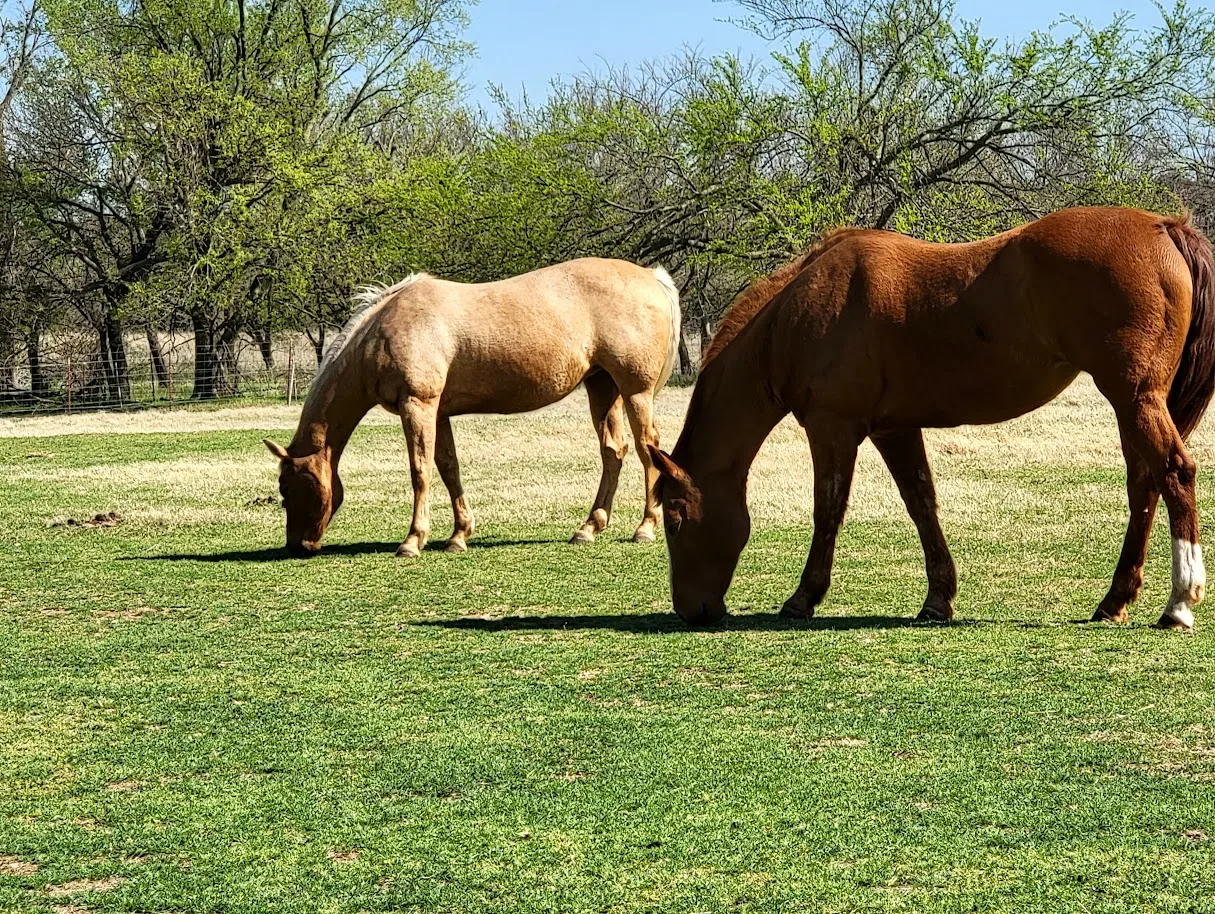
When Cindi Miles began searching for a companion for her mare who had recently lost her pasture mate, she chose the adoption route and learned of Nexus. In April 2021, Nexus matched Miles with a gorgeous Palomino mare known as Sahara. Miles was impressed by the level of transparency Nexus offered.
“They really wanted to match the horse with the person,” she says. Sahara’s main purpose was to act as a companion for Miles’ mare, but she also proved to be an excellent riding partner. “She was really easy to be around, and it was just a really good match,” Miles shares, adding that Sahara was also well-behaved for the farrier. Sadly, Sahara passed in 2024, but Miles remains involved in the world of adoption as a donor and supporter of Nexus.
Nexus Equine celebrates its 10th anniversary in 2026, and the organization has no plans of slowing down. “Equine welfare in Oklahoma has come an extraordinary distance in a relatively short time, and I am proud that Nexus Equine has been part of that progress,” says Hoch. “I look forward to the opportunities ahead as we continue improving the lives of horses across our state.”
Rehabilitation
The rehabilitation process often plays a significant role in finding horses their new homes. Cheri White Owl, president and CEO of Horse Feathers Equine Center (HFEC) in Guthrie, says the facility covers many aspects of the rehab process, providing chiropractic and other alternative therapies and working closely with veterinarians to determine each horse’s individual needs.
No matter the reason, any horse unable to be rehabilitated is given sanctuary at HFEC, and like Nexus, horses can always be returned to the facility if an adopter’s circumstances change.
Despite an increase in support, misconceptions about adopting equines still exist, and White Owl has heard them all: adopted equines are useless, untrainable and take a vast amount of money to maintain. Senior equines are often overlooked due to age, but White Owl stresses that these golden oldies still have much to offer.
“Older horses can be some of the greatest horses that people can have,” White Owl says. “They’re great horses to spend time with and work with.”
In addition to rescue and rehabilitation, HFEC makes education a top priority, offering programs like the trainer internship and barn manager internship for those interested in learning how to manage an equine facility. The organization also educates owners on the importance of dental and farrier care and the ins and outs of rehabbing.
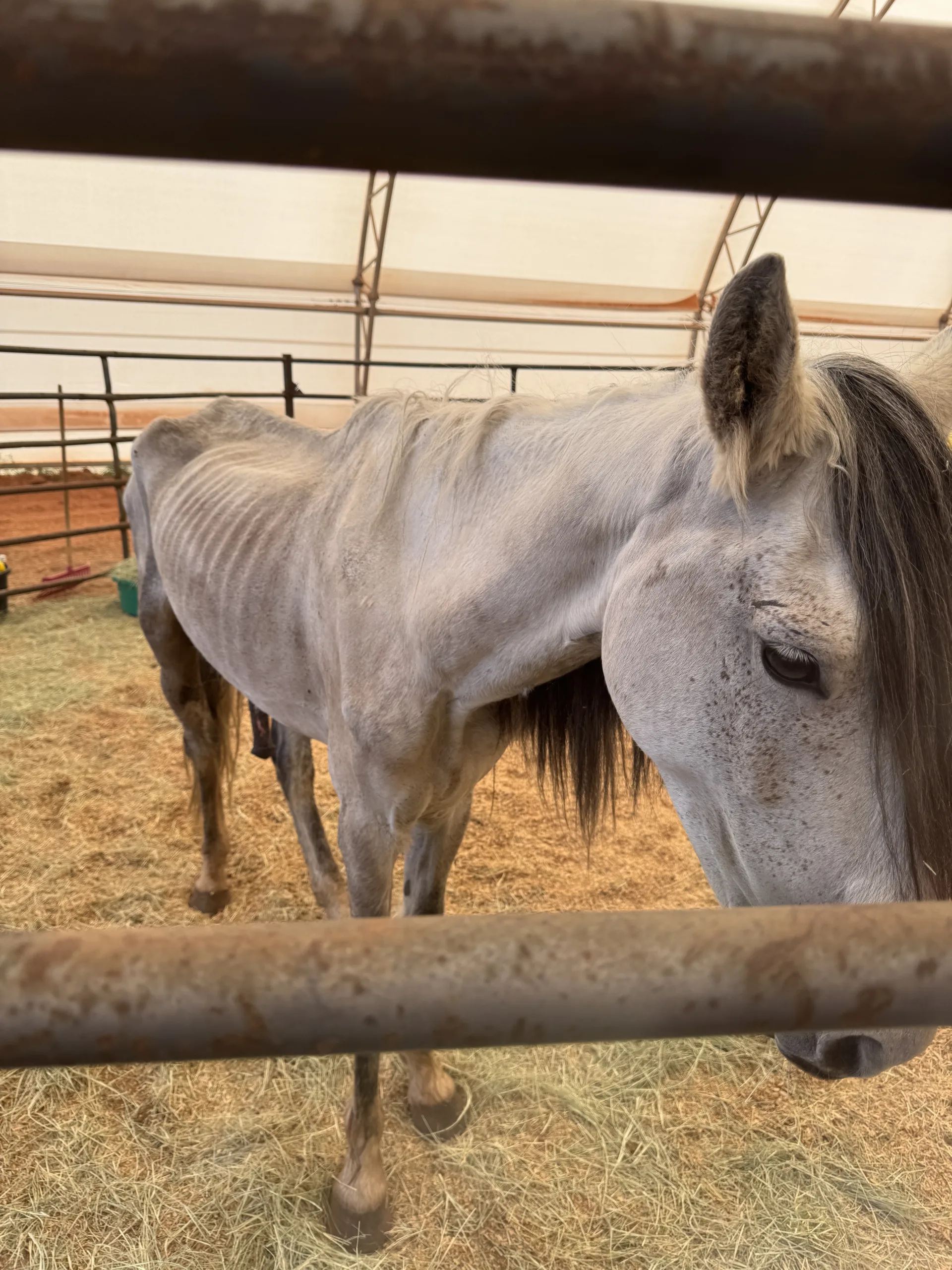
More than 300 horses have benefited from HFEC, including Gandolf (aka Gandy), who arrived at the facility after being rescued from a cruelty case in May 2025. Chances for recovery looked slim for the extremely emaciated gelding, who White Owl had to use a skid steer to lift up twice. But Gandy beat the odds and was ready to find his perfect match later that year.
“The relationship they have is phenomenal,” White Owl says about Gandy’s new mom. “I was waiting for the perfect, right home for him, and it just happened to show up.”
Buying horses from auction can reveal some diamonds in the rough — think Snowman — but it also comes with risks. Horses coming from auctions have little to no history known and could possibly carry diseases like strangles and EHV-1, which can infect other horses. Adopted horses have been through medical and behavioral evaluation, so adopters know exactly what they are getting.
Adopting a horse not only frees up space and resources at facilities so they can help other horses in need, but it’s also a great way to support equine welfare.
And what exactly makes equine adoption so meaningful? White Owl sums it up best. “The expression of love and gratitude from those horses — they seem to know that someone’s giving them the chance to have a life that’s fulfilling.”
To learn more about both organizations, visit nexusequine.org and horsefeathersequinecenter.org.