The Horses and Mules Behind Route 66
by Carol Mowdy Bond
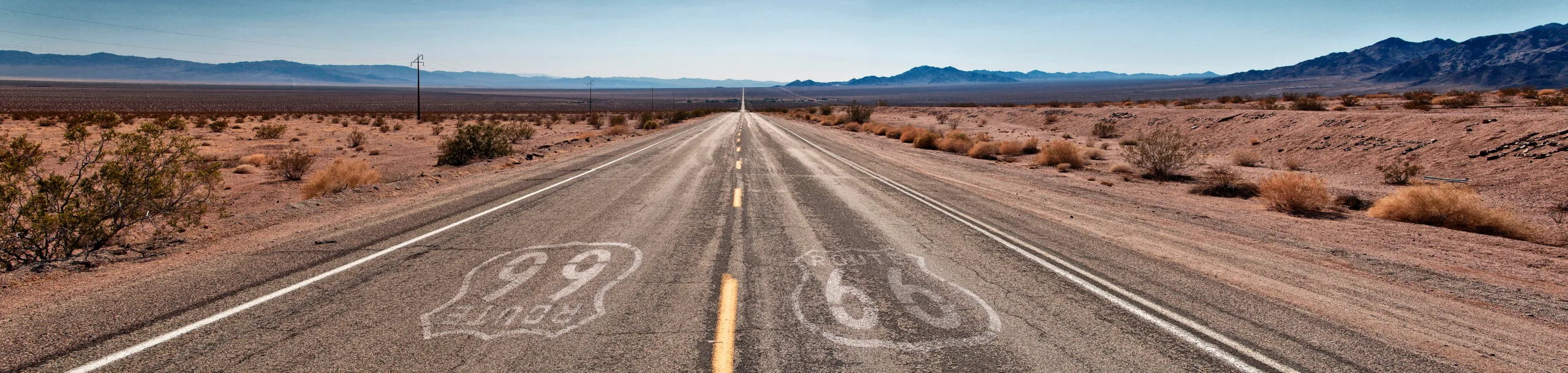
As roads go, Route 66 has always held its own. This year marks the U.S. highway’s much-anticipated 100th birthday, as fans still arrive from around the world to retrace its nostalgic path.
Stamped with a November 1926 birth date, the Chicago-to-Los Angeles highway crosses eight states. Even though it was decommissioned in 1985, the highway remains embedded deep into the American soul with names like Main Street of America and Will Rogers Highway. John Steinbeck’s 1939 book “The Grapes of Wrath” tagged the highway as the Mother Road. And John Ford’s 1940 film of the same name splashed the road to stardom, with Pixar’s animated “Cars” franchise reincarnating its celebrity.
Old Roads, New Name
To a great extent, the original 66 path was deliberately woven from pre-existing roads, with some going back for millennia. Its origins trace to Native American trails, preserving layers of history within its path. These routes were later used and adapted by European explorers and settlers, many traveling on horseback, who reshaped existing trails while establishing new roads. By the 18th century, routes such as the Santa Fe Trail and El Camino Real were incorporated into New Mexico’s 1926 alignment of Route 66. In the 19th century, military surveys expanded the network of wagon trails across the American West, many of which ultimately formed the foundation of Route 66.
In its earliest form, the 1915 Pontiac Trail was a Native American trail and stagecoach route, becoming the earliest connection between Chicago and St. Louis. Highway 66 launches from Chicago and then follows the Pontiac Trail through numerous communities. Laborers used horse teams to drag equipment when preparing many of those roadbeds.
Good Roads
As automobiles grew in popularity in the early 20th century, promoters pushed for improved roads to encourage travel and tourism. The Good Roads Movement inspired additional advocacy groups, including the 1913 Ozark Trail Association, which worked to develop a regional highway system. Its efforts expanded across Missouri, Oklahoma, Texas and New Mexico, and Route 66 eventually aligned with this network of roads.
Horses on the Clock
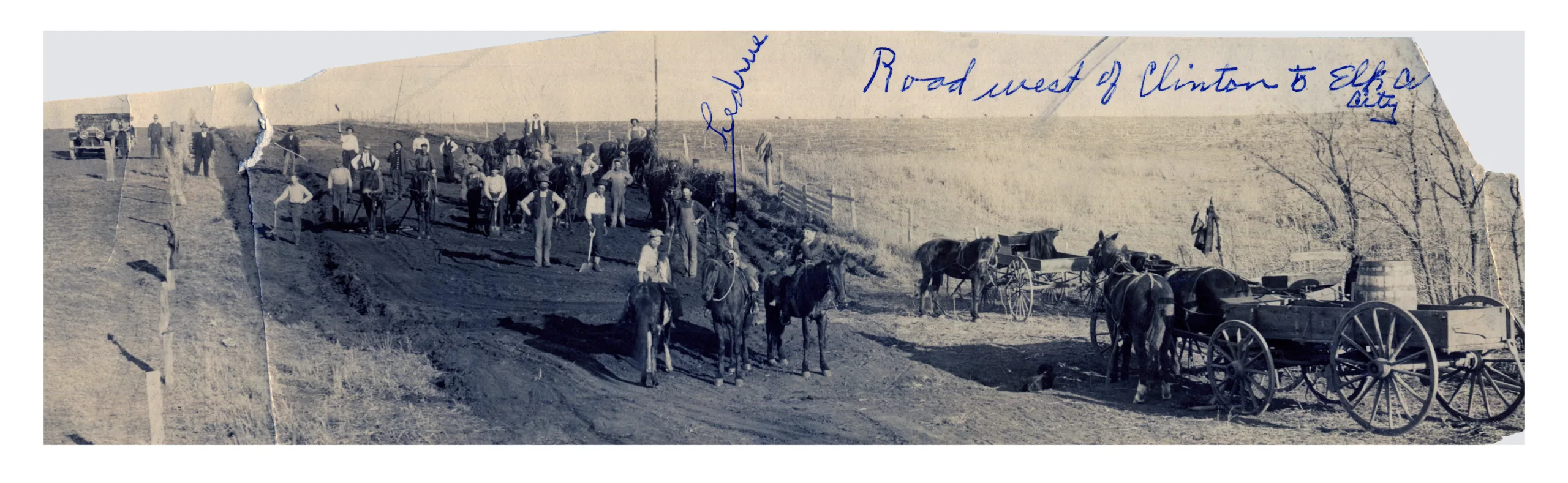
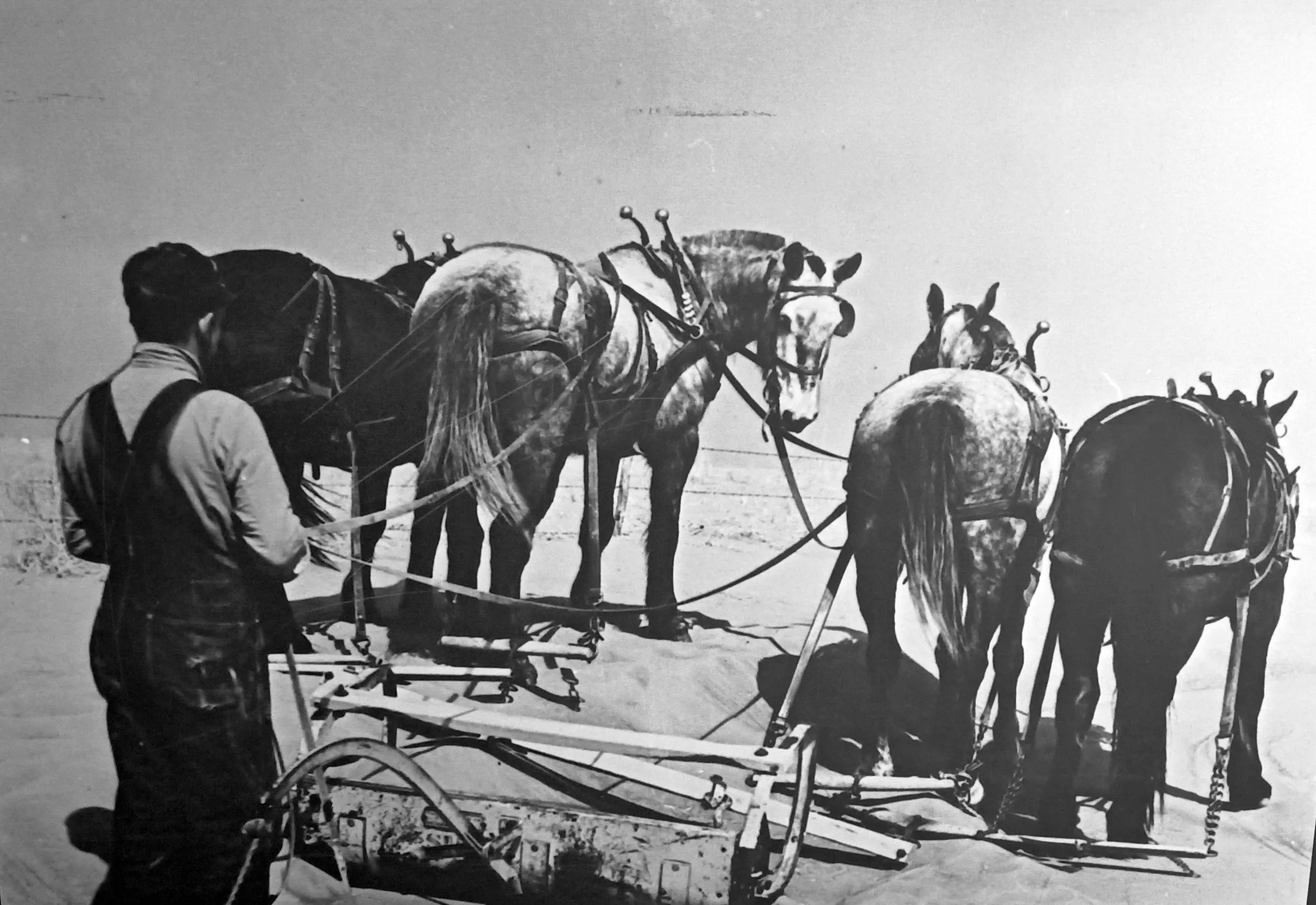
Working from pre-existing roads, Route 66 was shaped, improved and changed over time. During the 1920s and 1930s, local contractors in Missouri used motorized machinery to upgrade dirt and gravel roadways. Even so, laborers still relied heavily on horses and mules to haul gravel, level the land, and pull graders, scrapers and carts.
In the 1920s, locals watched crews build Route 66 through Missouri. They marveled as crews of men, mules and machinery graded and graveled local highways before paving them with concrete. Then later, those locals, along with area farmers who arrived in horse-drawn wagons, watched the traffic whiz past on those same roads that had transitioned into Route 66.
As the highway evolved, its route remained anything but consistent. On a single trip, travelers might encounter a fully paved stretch only to face brick, gravel or washed-out dirt roads elsewhere and even waterways without bridges. By 1932, Oklahoma’s highway department kept mules on hand to pull stranded cars out of the mud and mess. If drivers were too impatient to wait, area farmers would pull them out for a fee.
But the highway’s piecemeal development was part of what made it “everyone’s road,” giving it a distinct local character, especially since surfacing depended heavily on local and state funding and resources. The route connected farming regions, trading towns and growing communities to larger cities and economic centers. In fact, as the highway pushed into new areas, communities often clamored to be included on the route. As one example, local volunteers graded and graveled their road, linking Geary, Oklahoma, to the Key Toll Bridge across the South Canadian River and onward to Bridgeport, Oklahoma. Geary citizens even built a free campground for travelers. By 1927, their road and bridge were incorporated into what would become Route 66.
In Arizona during the late 1920s, mule teams hauled grading equipment for Route 66 construction. In Oklahoma, animal teams and wagons carried dirt between 1930 and 1938, while in Texas, Works Progress Administration crews in the mid-1930s loaded materials by hand and used mules to move them along the route. Across New Mexico in the 1930s, much of the work still relied on horses and mules, even as trucks handled portions of the hauling before animals finished the job in rougher stretches.
As the first fully paved U.S. highway, Route 66’s construction and pavement were completed in 1938. The entire process took 12 years, but the highway’s origins stretch back much further to the trails and roads that first carved across the American landscape. Horses and mules were not just part of that story, they were essential to it, shaping the routes that would eventually become the Mother Road and later helping build the highway itself. Their strength and endurance powered early construction in places where machinery could not go, leaving their mark on one of America’s most iconic roads.