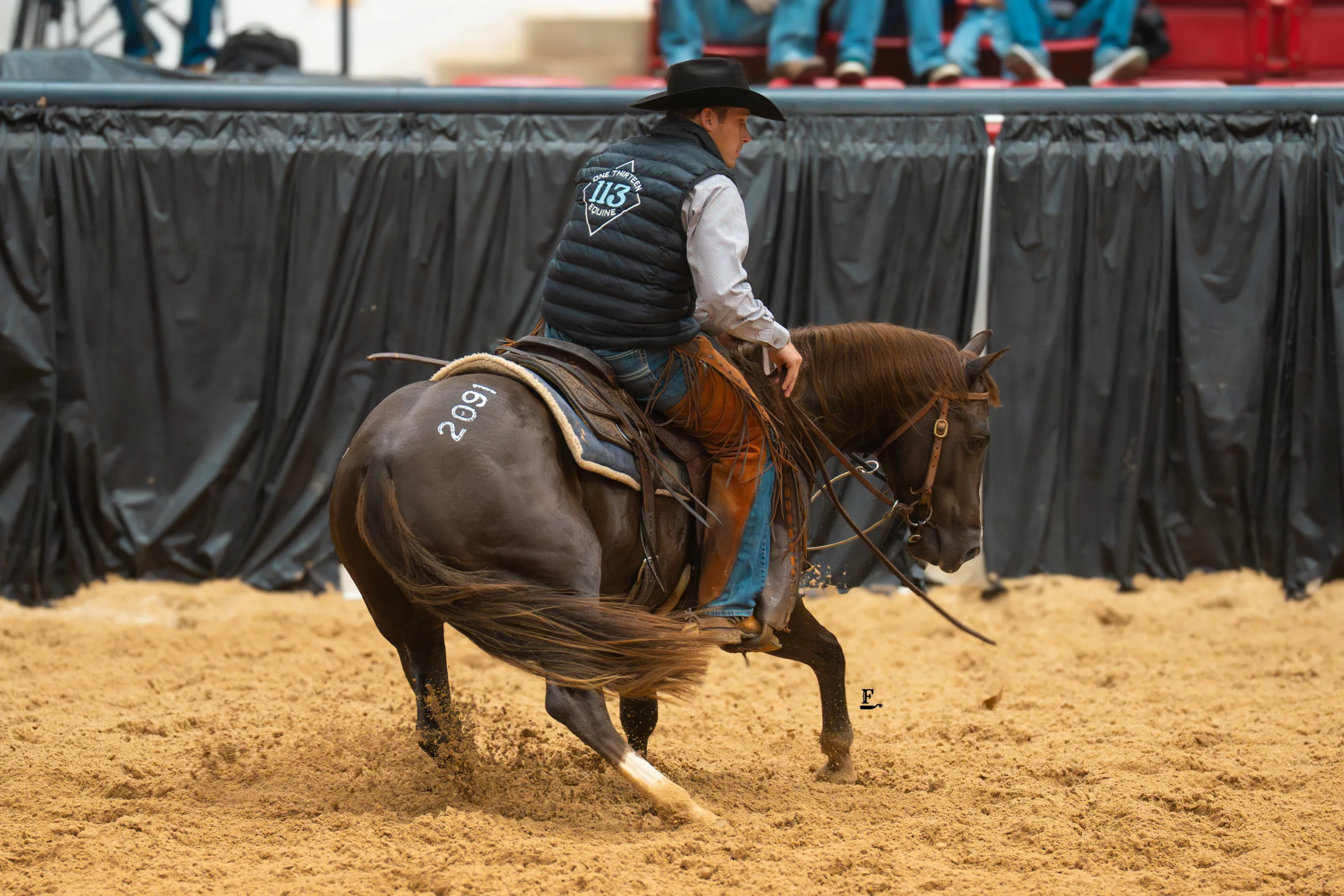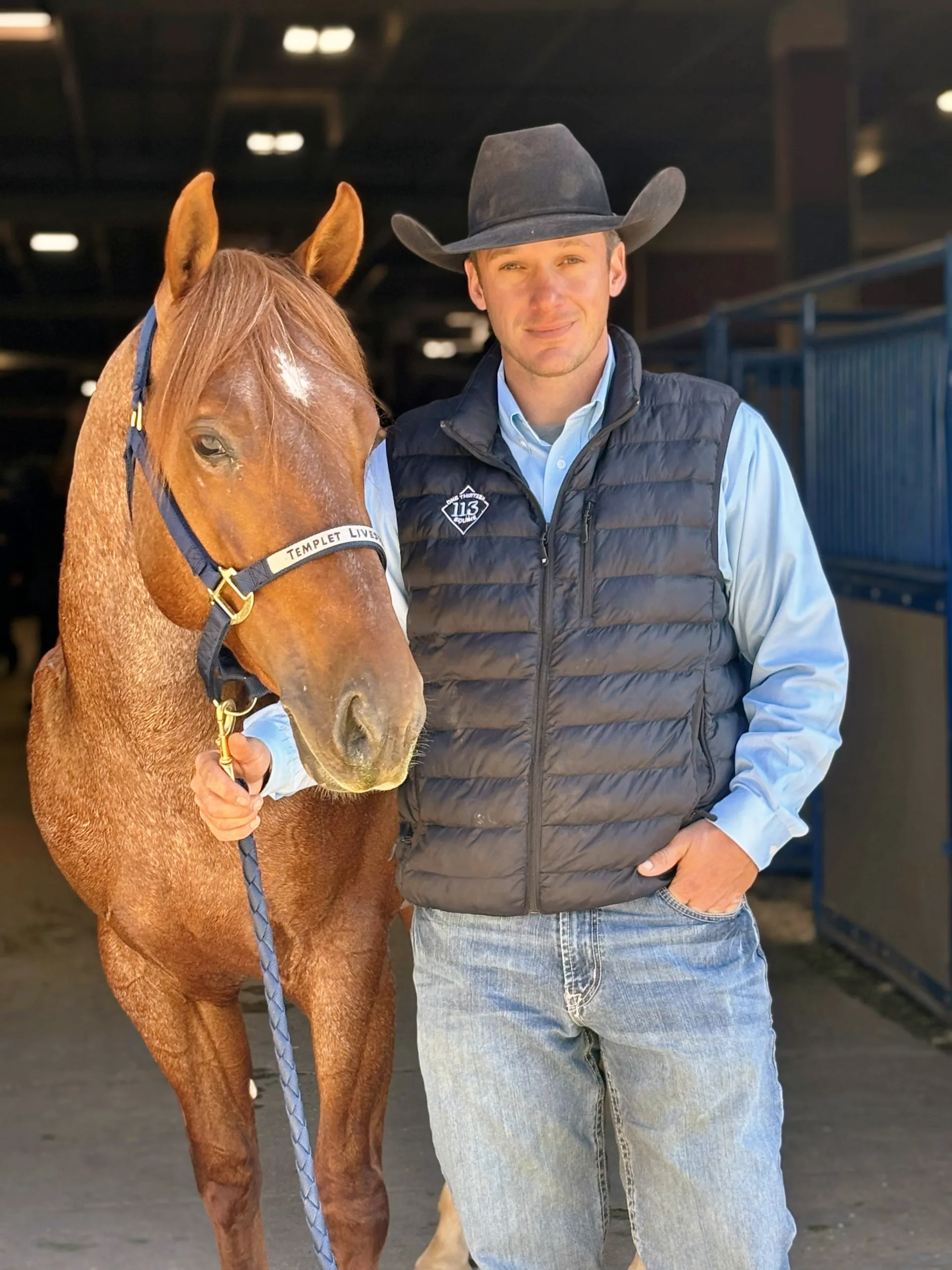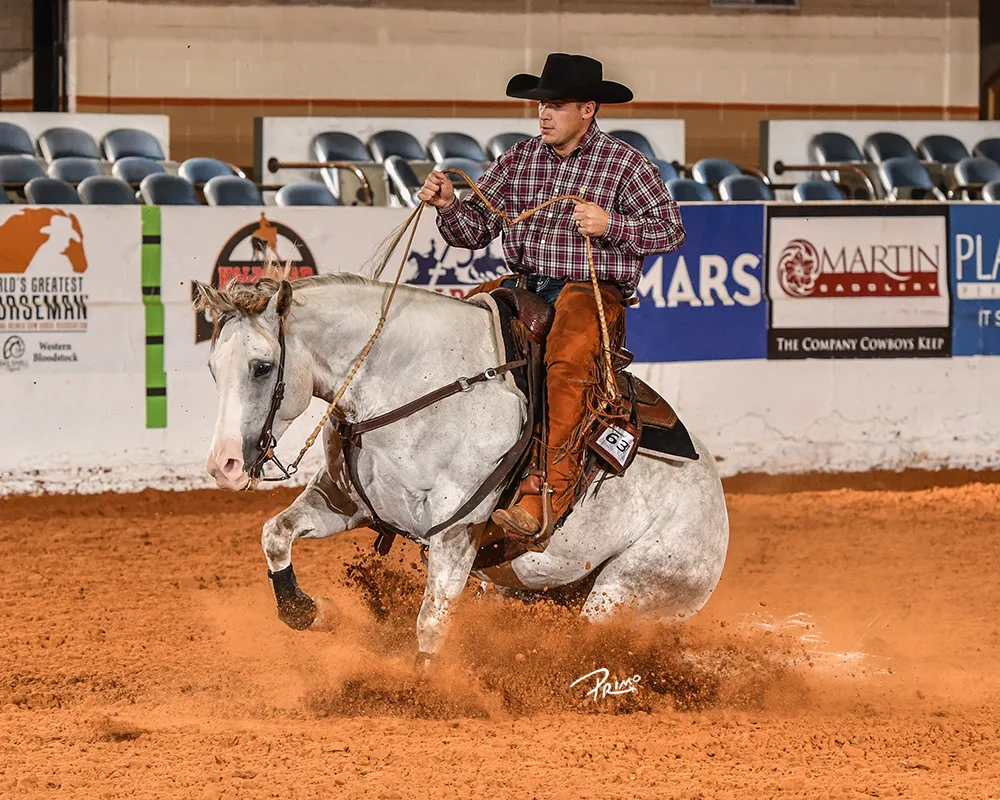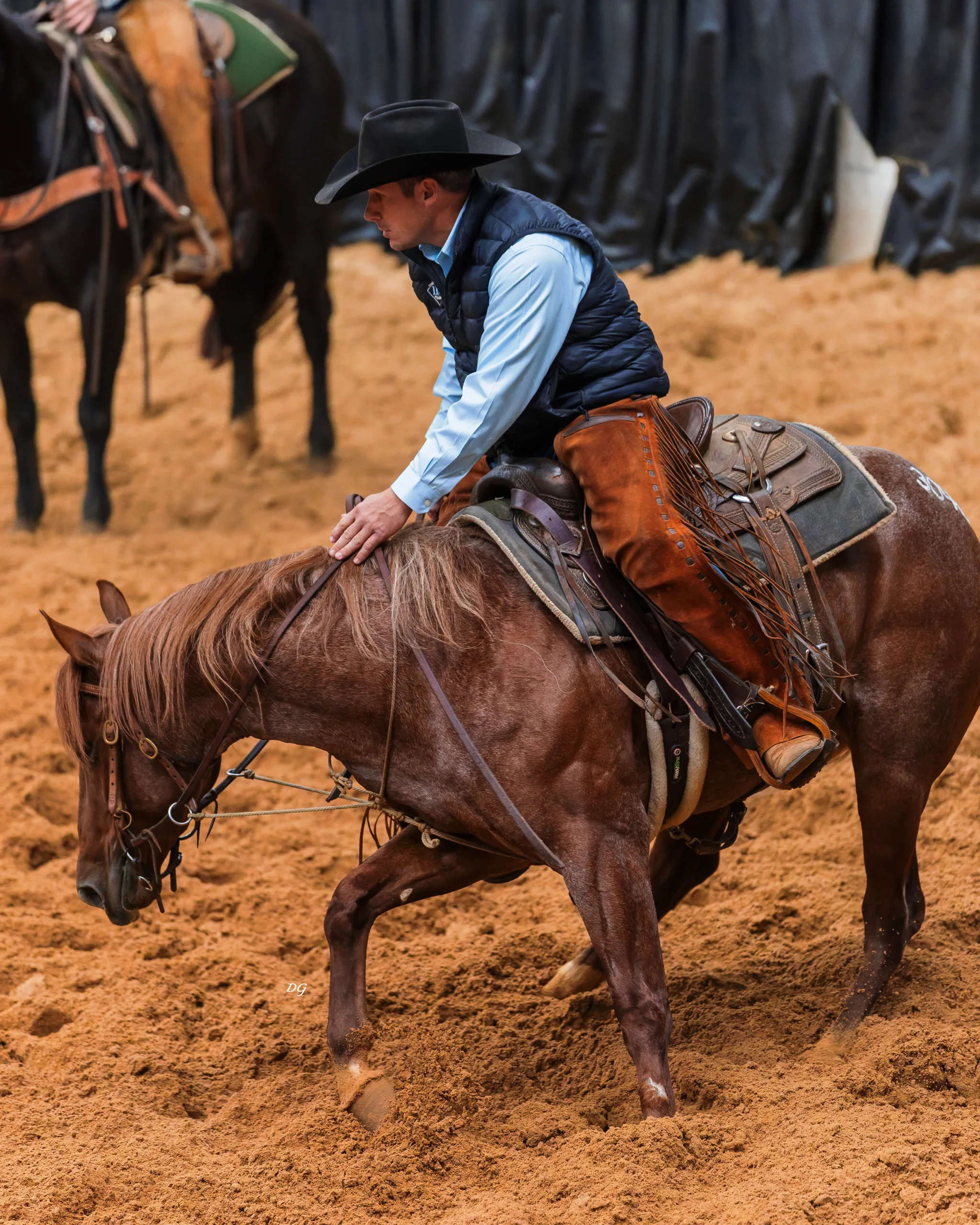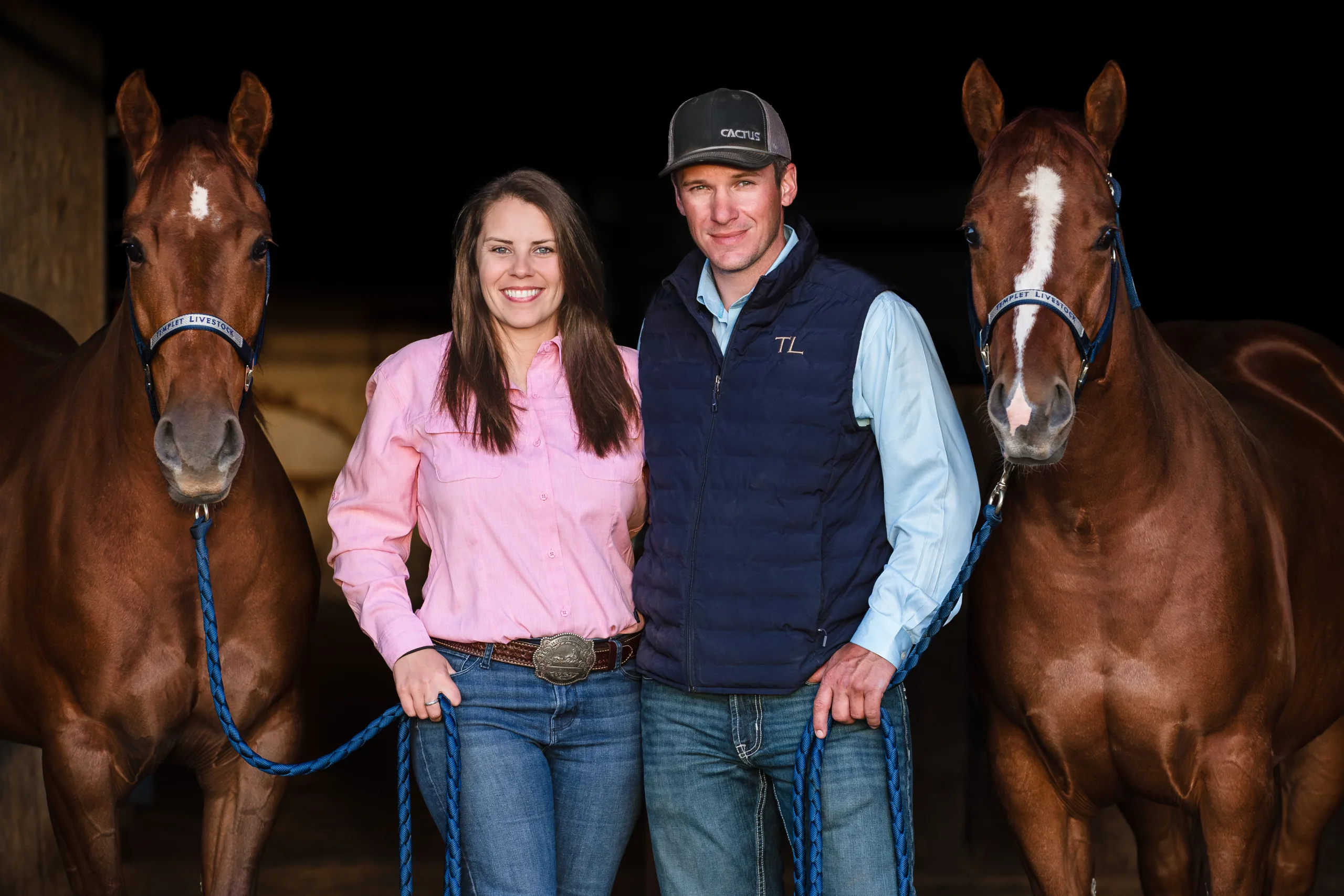
Inside Jared Templet’s Oklahoma program for training tomorrow’s cutting horse and cow horse champions
by Carol Mowdy Bond
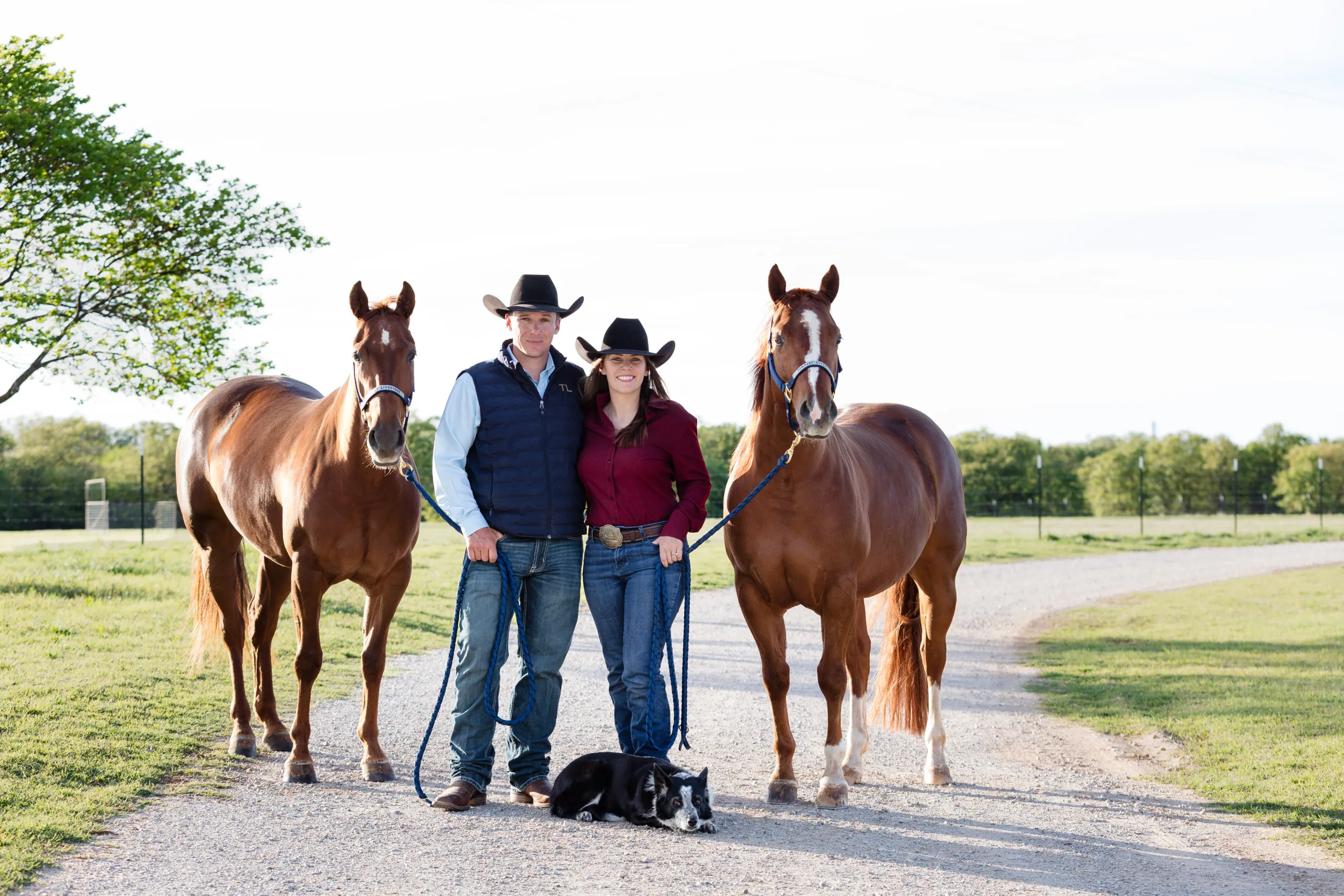
Jared Templet grew up on his family’s ranch in Wiggins, Mississippi, where his grandfather kept a few horses. It was there, still a kid, that he got his first horse.
As a teenager, Jared met cutting horse trainer Rufus Hayes, and he worked with him for several years. After that, he worked with three different mentors who are National Cutting Horse Association (NCHA) Million Dollar Riders: Lloyd Cox, Austin Shepard and Bill Riddle. Together, they have earned more than $28 million in NCHA competition, underscoring their standing in the cutting horse industry.
“Once I got into cutting horses, I realized my passion was horses,” Jared says. “When my wife, Taylor, and I moved back to Oklahoma in 2024, I ramped up my 2-year-old program. We moved right into the heart of cutting horses, which is mostly Texas and Oklahoma.”
Held annually in Fort Worth, Texas, the NCHA Futurity Sale, a premier auction for cutting horses and cutting horse prospects, is a marketplace for top-tier 2-year-olds and broodmares. High sellers frequently reach hundreds of thousands to over one million.
Cutting horses and cow horses are two separate stand-alone Western riding events/competitions focusing on working cattle. The two types of horses are primarily American Quarter Horses, but there are occasional American Paint Horses as well.
“These competitions originate from ranch work and test a horse’s athleticism, control and ability to handle a cow,” says Jared. “Cutting is its own event involving a herd of cows. Cow horses, often called Reined Cow Horses, involve a separate three-part event.”
While cutting horses and cow horses are both generalized as cow horse events, Jared explains, “the two events utilize a horse to influence cattle. In cutting, you have a whole herd and cut one cow out of the herd, and the horse has to keep it separate. Typically, you cut two to three cows in a 2.5-minute timeframe. You have four people helping you: two herd holders who help keep the herd behind you in place, and two turn back helpers who help keep the cow you cut in front of you. Once you separate a cow, you and your horse are expected to ‘hold’ it separate from the herd.”
The cow horse events are three-part events consisting of rein work, herd work and fence work. “My program focuses on the first year and foundation of training horses for these two different events,” Jared says.
Jared primarily competes and trains cutting horses, but a lot of the basics and fundamentals of the first year of training for cutting and cow horses are similar.
It usually takes Jared at least two years to train a cutting or cow horse from start to first show. “When we first receive horses early, in their 2-year-old year, they have never had a saddle on, and most have barely been handled,” he says. “When the year is over, they are starting to work cattle on their own with less guidance. This sets them up for success in their 3-year-old year and forward.”
A lot of Jared’s horses move on to another trainer or will be sold at the NCHA Futurity Sales. His personal horses are sold privately or through other sales online.
“We occasionally show, but because young horses require so much consistency, we try to stay home as much as possible,” says Jared. “Right now I have a 4-year-old that we personally own, and Taylor and I really enjoy showing, and we have won money on. I have shown a lot in the past, but my passion is to stay home and train the next generation of prospects.”
Most of the time, you’ll find Jared on his Marlow, Oklahoma, ranch, where his main focus is raising and starting cutting horse prospects. He raises a few horses, but he primarily buys yearlings. He rides them for a year and then sells them at the end of their 2-year-old year, either privately or at the NCHA Futurity Sales. At any given time, his ranch averages 40 horses, plus 60 to 90 head of cattle.
“I try to stick to just riding 2-year-olds because I really enjoy that process,” Jared says. “I like seeing them go on and win in another program. I also take in outside 2-year-olds and typically have them for a year.”
Although he has Oklahoma customers, most of Jared’s clients live all over the country. They find him through his Templet Livestock Facebook page.
“I think I most enjoy the process of watching young horses develop into quality prospects and then go on and be successful,” he says. “I would go so far to say that their first year of training is the most impactful year of their lives.”