by Abigail Stark
It’s a miserable winter day — day 15, to be exact, of not being able to ride. Your normally mild-mannered, steady Eddy gelding, who usually stays in tip-top shape, has no outlet for his pent-up energy and has decided to take it out on the barn walls. He’s made it his personal mission to gnaw his way to freedom like a rabid beaver.
So what’s a rider to do? It’s cold, it’s wet, and it’s downright miserable outside. The following is a short list of tips and tricks to help keep your horse from eating down the barn, prevent bodily injury when you attempt to hand-walk your fire-breathing dragon, and maybe even save yourself from pulling a muscle the next time you’re training in the saddle.
Simple Fixes for Big Results
Before you start designing an elaborate equine obstacle course or enrolling your horse in every spring clinic on the schedule, take a breath. Overcomplication is the enemy! Sometimes the simplest fixes make the biggest difference.
We just talked about how horses are forage-seeking, constant grazers, right? But we also don’t want to pull out a nearly foundered, hay-stuffed water buffalo with no sign of rib or muscle by spring.
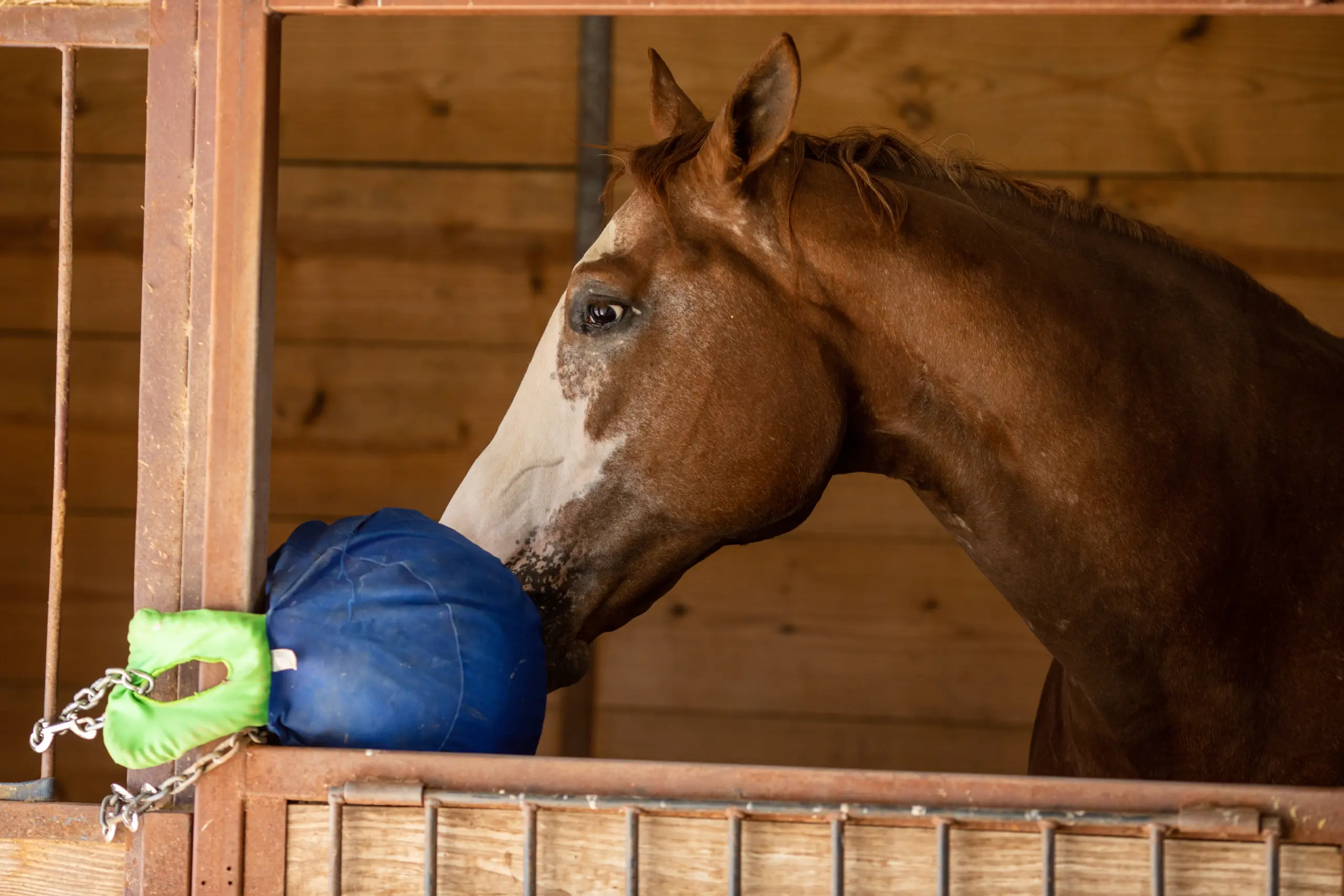
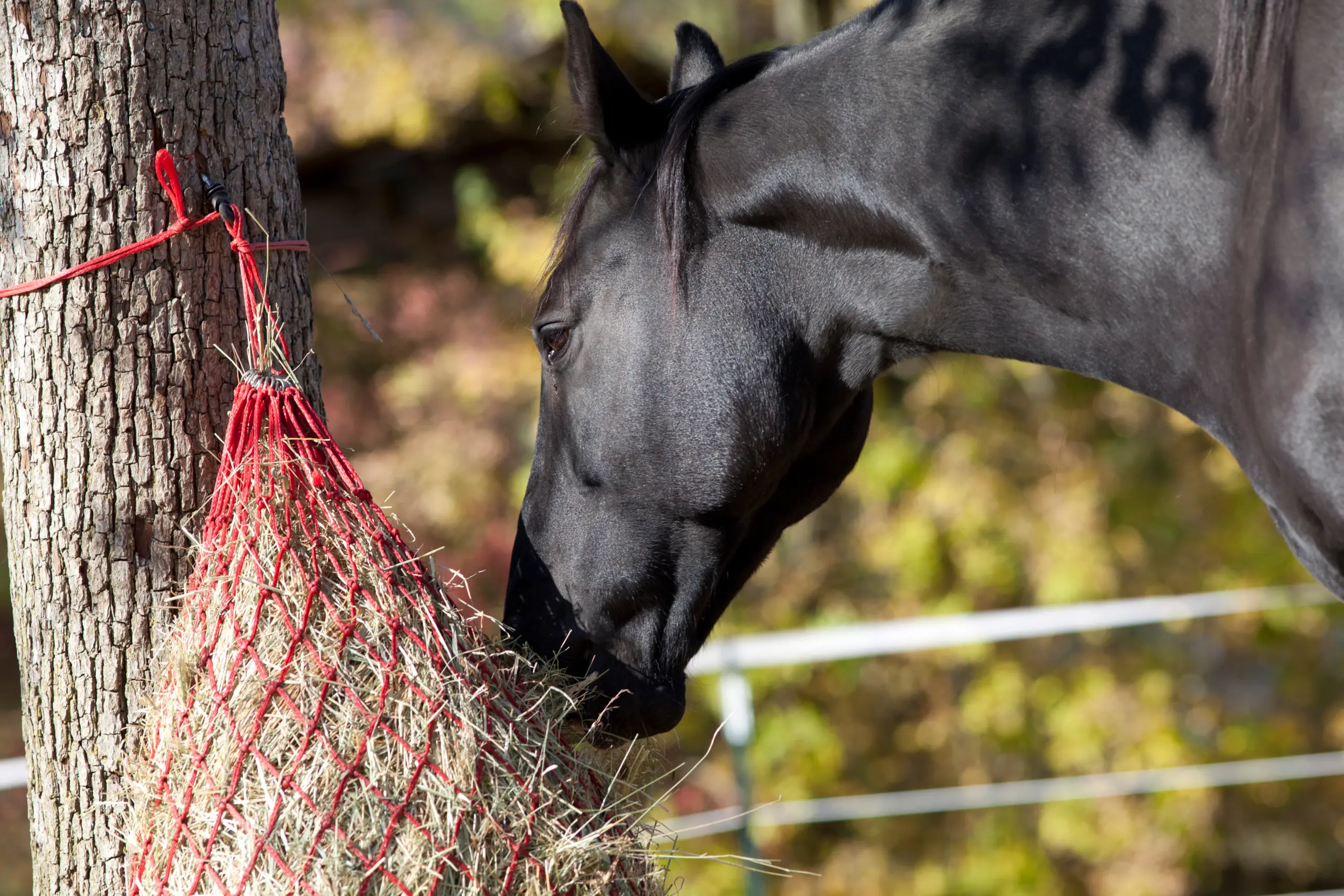
Slow feeders are an excellent option to strike a balance. Brands like Chewy and Dover Saddlery offer endless choices for slow feeders and treat balls that can attach to almost any style of stall or be used loose. For non-food entertainment, Jolly Balls are a great choice — tough, long-lasting and capable of surviving several seasons of abuse (and the occasional temper tantrum).
The Why and the How
So why do horses act out during the winter months? Simply put, horses are grazing herd animals built for constant movement. At their core, they’re designed to wander miles each day, browsing and grazing as they go. Unfortunately, when we domesticate them, we take that freedom away and replace it with the comfort and safety of stalls, turnout schedules and cozy blankets.
That comfort comes at a price. The result is a conflict between their survival instincts and their wild side, the one that still dreams of running with the bison across open plains. (Let’s be real though: “Fluffy” wouldn’t actually want to be out there shivering under a frozen sky, pawing at icy grass. But good luck convincing him of that while he’s spinning his shavings into a mushy mess and plotting his next great escape.)
The bottom line? We have to strike a balance. We must provide enough enrichment to keep their minds active and happy, while still keeping them safe and comfortable through winter’s worst.
Inexpensive Options
Winter is often a slow season for all of us and no doubt an expensive one at that, especially when you’re already tossing piles of hay into the stall just for your horse to stomp into his shavings. But enrichment doesn’t have to drain your wallet. Here are a few cost-effective ways to keep your horse’s brain busy without breaking the bank:
Rinse out an empty milk jug, remove the cap and fill it with a handful of treats. It might not last long, but it’ll provide a few glorious minutes of entertainment (and chaos). Water bottles can work the same way; toss in a handful of grain, leave the cap off, and hang or tie it to the stall wall for some satisfying rattle-and-roll fun.
Old soccer balls also make great DIY toys. They’re sturdy enough for a good batting session, easy to replace, and offer simple, effective stimulation that curbs boredom before it becomes bad behavior.
Get Out of the Stall
Anytime you can get your horse out of the stall, peel off that blanket and enjoy a good old-fashioned grooming session, it’s time well spent. Bonding time is every bit as important as saddle time, and it gives you a chance to catch small warning signs of illness or injury before they turn into big problems.
Beyond grooming, there are countless online resources for groundwork and non-riding activities that are far more engaging than a simple hand walk. These sessions can make a huge difference in your horse’s mental health as well as your own.
In “Groundwork Boredom Busters,” by Jessica Lefoy, she says, “Groundwork can be extremely beneficial to both inexperienced and seasoned horses. What I like most is that it really gives you the ability to analyze the horse’s movement much differently than when you’re on their backs. You can produce work that’s mentally stimulating while also improving their training — and I feel that anything that can be done on the horse can be done from the ground.”
Safety First
Before you go wild crafting in the barn, let’s talk safety. Always pay close attention to how you attach any toy, so there’s minimal risk of your horse getting caught. Loose twine, hanging cords or frayed straps can easily trap a jaw, leg or halter. Check every edge and connection for sharp spots that could snag an eye, nick soft skin or scrape a curious nose.
When using hay nets, hang them high enough to prevent a pawing leg or the edge of a shoe from getting caught in the mesh. What starts as a well-meaning boredom buster can quickly turn into an expensive vet bill and a missed spring show season.
According to GG Equine, “Behavioral changes are one way for horses to express boredom, although it can look vastly different from horse to horse. You may see:
- Lethargic behavior and sluggishness
- Spicy, rambunctious play
- Repetitive behaviors like weaving or stall walking
- Surly expressions and an unwillingness to interact with you
- Stage-10 clinging behavior
- Development of stable vices
“Notice that these behaviors are also signs of many other conditions, like ulcers, mystery pain and self-soothing vices. Anytime you notice a sudden change in your equine partner’s behavior, call your vet. It’s tricky to help your horse without first narrowing down the reason for the behavior.”
Personal Tips
We’ve talked plenty about keeping your horse entertained and your barn intact this winter, but what about you? Winter is a perfect time for rest and recovery, but it’s also ideal for cross-training. Staying active now means coming back in the spring stronger, more balanced and less prone to injury.
Lengthening exercises, like stretching and Pilates, are excellent, low-impact ways to stay in shape. Back and core work, something we often neglect, can make a huge difference in your riding strength and posture. As noted in an article featured on the R.J. Classics blog: “Another abdominal muscle for equestrians to focus on is the transverse abdominis (TVA). The TVA forms a corset shape between the ribs and pelvis, and its purpose is to help you remain upright. It also supports the spine, making TVA strengthening exercises a pivotal part of reducing back pain.”
Simple, no-equipment moves like planks, bird dogs, burpees and Supermans can all be done from the comfort of your home (preferably near the heater). A few minutes a day can make the winning difference when show season rolls back around and might just keep you from pulling a hamstring the first time your trainer says, “Drop your stirrups.”
Winter might test your patience (and your barn walls), but with a little creativity, it doesn’t have to be boring. A mix of smart enrichment, safe play and a bit of rider self-care can turn those long, cold months into an opportunity for growth, for both you and your horse. By spring, you’ll both be stronger, saner and maybe even less inclined to chew through the stall boards.