Where Healthy Land Builds Healthy Stock
by Carol Mowdy Bond
A fifth-generation Oklahoman, Corey Bradshaw founded Stuk B Ranch two decades ago on land that has been in his family for more than a century. He hails from a long line of ranchers and farmers, continuing a legacy that spans generations.
Corey began working for rodeo companies at age 11 and bought his first cows six years later. By 20, he was raising horses. His on-the-ranch upbringing and training naturally steered his career into ranching.
His wife, Selena, is involved in nearly every aspect of the operation, overseeing the ranch office, marketing and sales. She competitively showed horses in her youth and earned university degrees in animal science and animal production, along with certification in artificial insemination (AI).
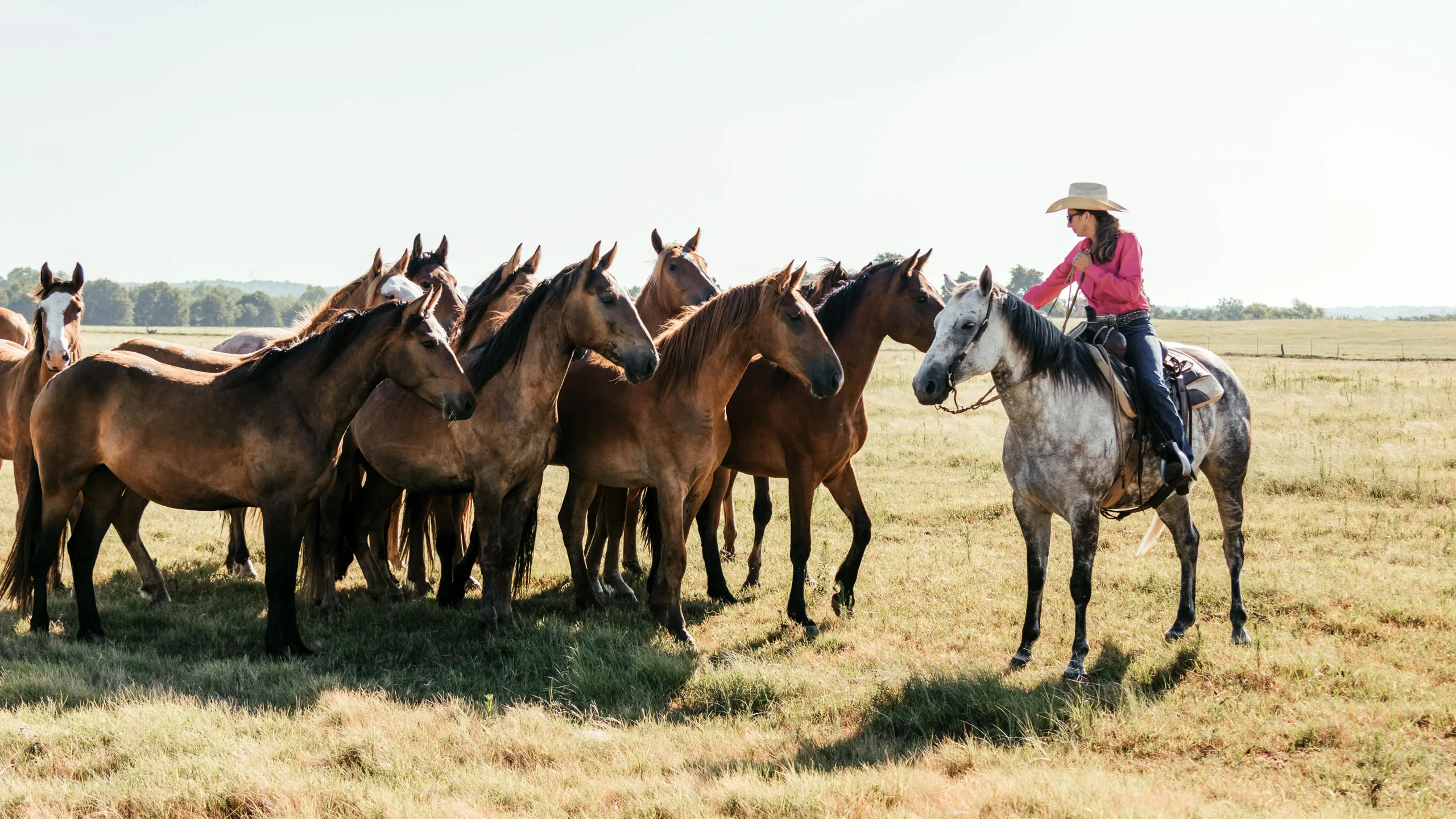
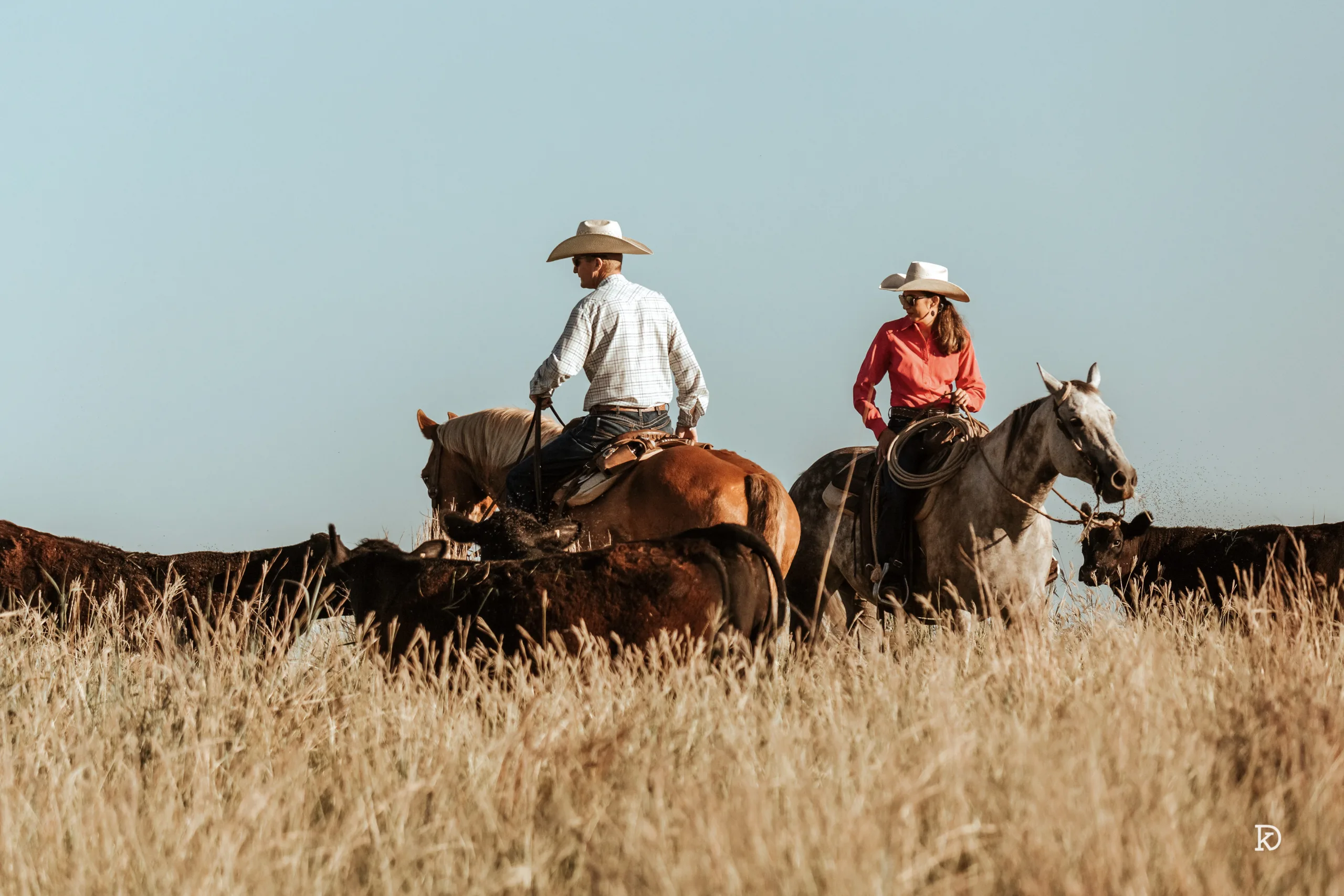
The Bradshaws raise cattle and horses on their Comanche County ranch. They typically have about 70 horses, most of them bucking stock bred for saddle bronc and bareback bronc competitions at various kinds of rodeos up to the professional level.
Raising top-tier bucking horses is a multi-faceted process that involves breeding, raising and training horses for strength, spirit, power and performance, all while fostering each horse’s personality in the proper environment. The Bradshaws begin harnessing the bucking tradition when foals are on the mares. They rotate them from different pastures, so they get used to coming at one specific whistle and moving away at another.
“In a lot of ways, bucking horses are either bucking horses or not,” says Selena. “They either want to buck or don’t, but we do handle them so they can have a more successful career. When we wean, they go to a pen with an older mare that babysits them, and we feed them using buckets so that they get used to being around us on the ground. After weaning, they get turned out, and then we bring them back to the house as 2-year-olds. Then they get run through the bucking chute that we have and practice getting sorted and loaded onto a trailer to get used to what it’s like as a real bucking horse.
“We use a dummy to get a few outs, aka bucking performances, on them. When they turn 4, we take them to their first outs. We sometimes haul them to Clarendon College in Clarendon, Texas, to do this. The students get to practice, and we get to see what our horses are going to do with some good riders.”
For their 250 head of cattle, the Bradshaws have some fall calvers that calve in August and September, along with some spring calvers that calve in March and April. They sell most of their cattle at the sale barn as commercial cattle. However, they have also grown their butcher calf program, which involves selling straight to the consumer. Buyers come from as far away as Colorado and Nebraska.
In the past, Corey always raised livestock the conventional way — spraying and fertilizing the grasses for grazing — but a few years ago, regenerative practices grabbed his attention. Although initially a skeptic, he dove into research.
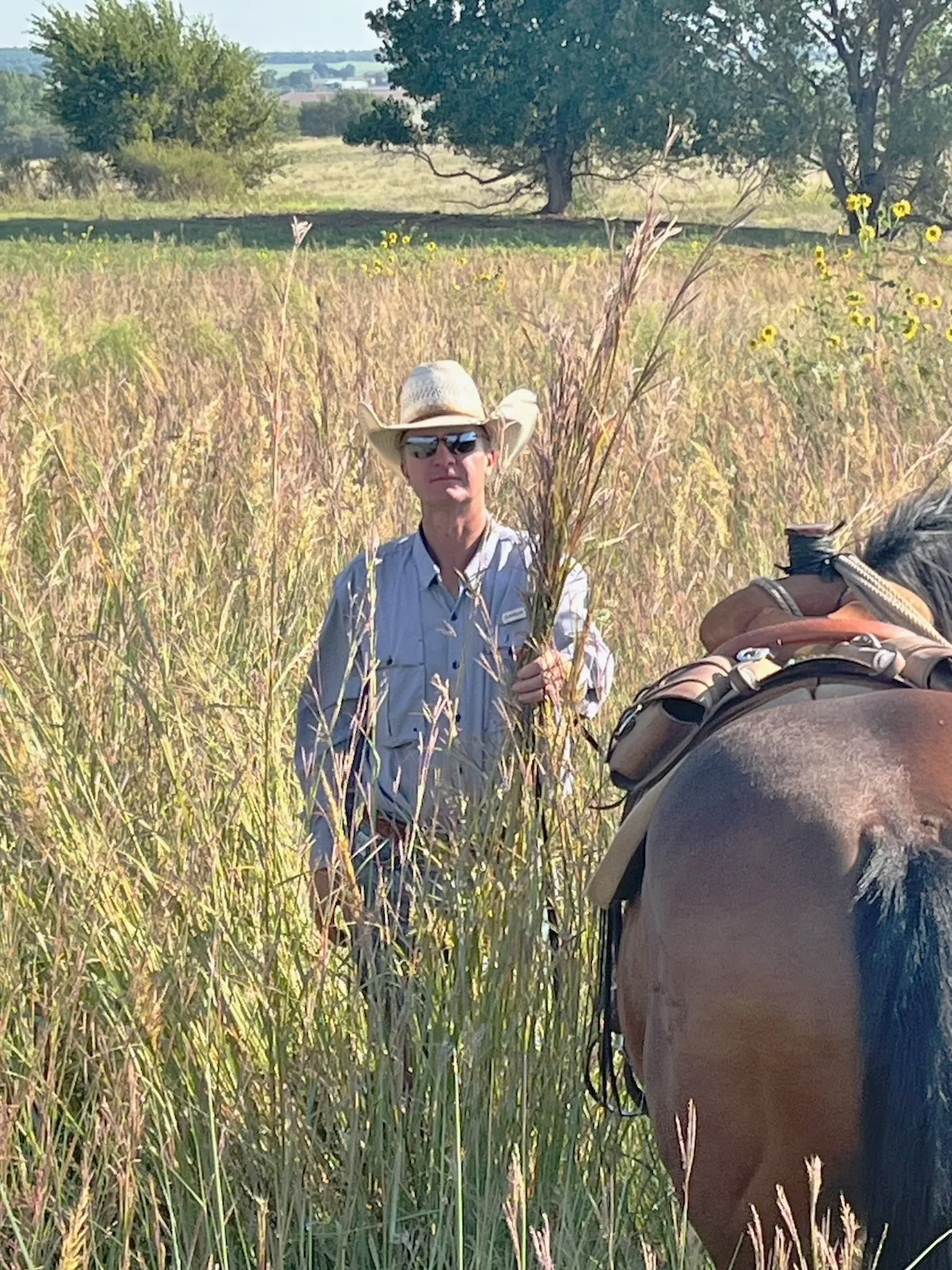
“To me, regenerative means farming or ranching without added inputs,” Corey says. “One day it just clicked; what did Mother Nature do hundreds of years ago with the buffalo and all the wildlife? There were no sprays or chemical fertilizers.
“Now it’s life-changing for me; all the vegetation you see, that you killed every year with spray, you didn’t even know was there because you never gave it a chance to come up. All that vegetation is beneficial and there for a reason. They might not benefit your livestock today, but they’re benefiting your ground and soil.”
The Bradshaws have fully embraced regenerative practices that improve the grasses where their cattle and horses graze.
“I never realized that your soil isn’t just dirt unless you abuse it,” Corey says. “It’s a living organism with tons of stuff in your soil. We quit putting herbicides and chemical fertilizers on our land. We’re letting Mother Nature take care of itself. We rotate cattle daily. We are a high-density grazing operation but [with] a long rest period.”
The Bradshaws put cattle on small acreages for short periods, then move them to allow the grass to fully recover before grazing again. “We might do a 30-day rotation,” Corey says. “It’ll be a 30-day rest period before we get back to that acreage. In summer, grass is growing slower, and it’s drier. So we might do a 60-to-120-day rotation depending on the rainfall.”
With their new practices, the Bradshaws are improving soil and grass health while producing healthier horses and cattle. They sell their livestock through Facebook at Stuk B Ranch. Selena adds, “I like seeing animals that we breed grow up to be successful in the arena or go on to feed America.”