by Ashley Daily
Equine chiropractic, sometimes called veterinary spinal manipulation therapy, involves the diagnosis and treatment of musculoskeletal disorders in horses. The idea of doing chiropractic work on animals began in the late 1800s, and what was once greeted with skepticism has now become accepted as a complementary therapy option.
The goal of chiropractic is to restore the stability and range of motion in joints and reduce pressure on nerves. Joints are structures where two or more bones meet. Each joint is supported by its own set of nerves and blood supply. One misconception about chiropractic is that it is done to “pop” joints back into place. Joints in horses rarely become out of place. Instead, the joint becomes restricted, inhibiting its range of motion.
You and your veterinarian might decide an adjustment is needed by observing certain behaviors in your horse such as abnormal posture, uneven gait, muscle tension or, in some cases, a sudden reluctance to be groomed. During the examination, the chiropractor will palpate the horse’s joints and check its range of motion, a process known as motion palpation. The chiropractor will also observe gaits and posture.
Chiropractic Adjustments
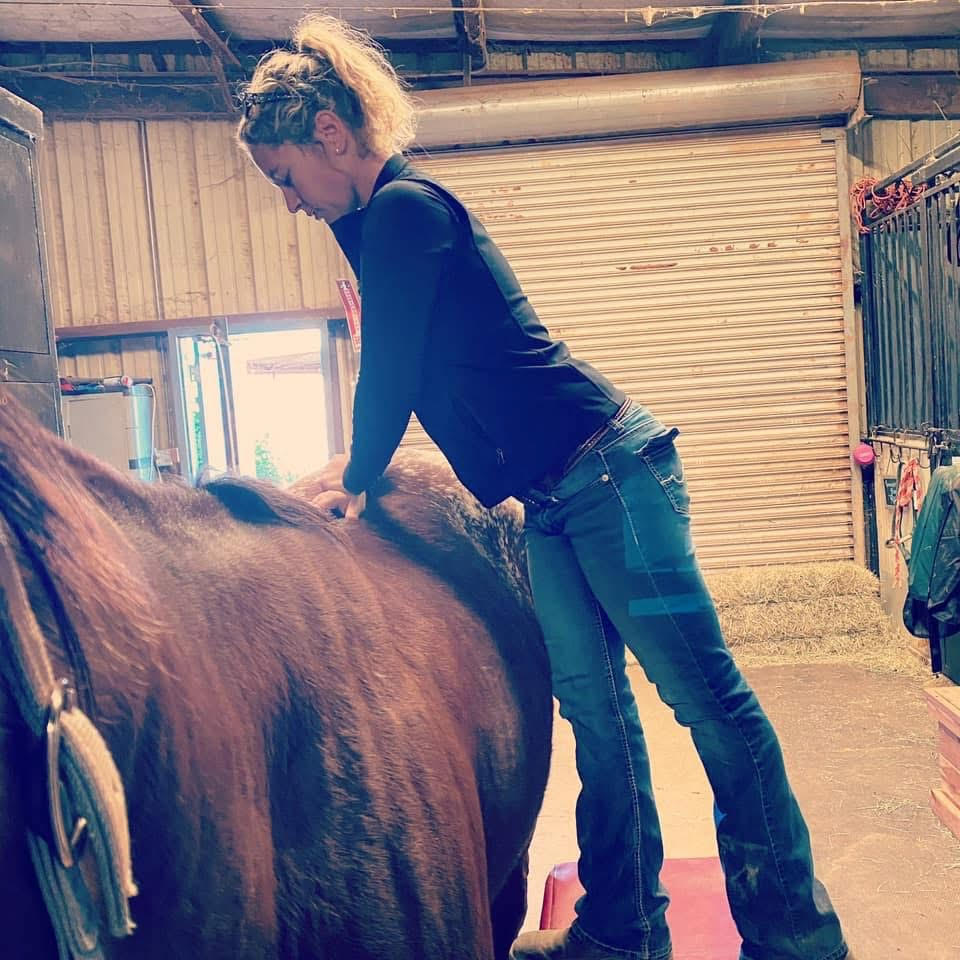
A chiropractic adjustment is done by the chiropractor using the hands to make high-velocity, low-amplitude thrusts in specific directions to help restore the joint’s range of motion. The major adjustment points include the poll and cervical vertebrae, withers and sternum, and front and hind limbs.
When your horse has a chiropractic adjustment, you might expect to hear the same snap-crackle-pop you hear at your own chiropractic appointment, but think again.
“Those are called cavitations, and they actually should be fairly uncommon in horses,” says Grace Owen, D.V.M., of Great Plains Veterinary Services in Arcadia, Oklahoma. “The popping sound you are hearing is actually the release of a gas bubble within the synovial fluid in the joint, which is caused by a sudden pressure change from the manipulation.”
Although those cracks and snaps are common in humans, they are typically limited in horses. Owen points out that she occasionally hears them during adjustments of cervical vertebrae, but in general, your horse’s chiropractic appointment shouldn’t sound like a Fourth of July celebration.
Chiropractic adjustments have proved to be helpful in several situations. For example, a horse with “kissing spine,” a term used to describe the touching of the long, thin bones that project upward from the horse’s spine, might be given chiropractic adjustments in addition to other treatments. When owners find that their horse is suddenly difficult to bridle, a veterinary exam might show that an adjustment of the temporomandibular joint (TMJ) is in order. Of course, a dental issue also might be to blame.
An important thing to do before making a chiropractic appointment is to be sure your horse is up to date on dental and farrier care. Horses with overdue dental work might not hold adjustments for long in the poll and TMJ areas. Horses that haven’t seen the farrier for a while might hold adjustments to the limbs and pelvis for only a short time.
Benefits of Chiropractic
Case studies show that horses recovering from musculoskeletal injuries might have faster healing times and improved functional outcomes when chiropractic is paired with other treatments. In addition, chiropractic, when coordinated with proper care, can improve a horse’s overall well-being, with benefits including better performance, better pain management, and improved immune system.
Horses that participate in certain sports might benefit from certain adjustments. For example, reiners can benefit from adjustments to the withers and pelvis, dressage horses could use TMJ adjustments, and barrel horses might find hip-joint adjustments to be just what they needed.
Qualifications of Chiropractors
As when choosing any other health practitioner for your horse, it’s important to make sure the person is licensed and qualified to do the job. Owen stresses that it’s important to be sure the chiropractor is certified.
“Don’t think it’s wrong to question,” she says. “There are only two legal chiropractors — and that is either a doctor of veterinary medicine (D.V.M.) who has gone on to get an animal chiropractic degree or a doctor of chiropractic (D.C.) who has gone on to get an animal chiropractor degree. In either case, making sure you are using a person that is qualified for the job will ensure a better and safer outcome for your horse.”
The main certification board for animal chiropractors is the American Veterinary Chiropractic Association (AVCA), recognized as the world leader in animal chiropractic.
Chiropractic work should never be performed by individuals who are not qualified because adjustments that have been done incorrectly can cause injuries such as muscle strains and nerve damage. A good question to ask a potential chiropractor would be, “Do you use sedation?” Sedation should never be used on a horse that receives chiropractic adjustments because a sedated horse will not be able to give “feedback,” resulting in possible damage from overadjusting. It would also be a good idea to ask how many years of experience the person has.
Veterinarians who do not do chiropractic will likely recommend a licensed professional to work on your horse. Another way to find a reputable chiropractor is through the AVCA website, which has a “Find a Doctor” section.
The chiropractor might advise that your horse not be ridden after chiropractic adjustments for the remainder of the day because the body might need time to get used to the adjustments. In some cases, the process could take as long as 48 hours, especially if it is the first time your horse has had an adjustment. Your chiropractor might also suggest some stretches for your horse to help prevent future misalignments.
In conclusion, chiropractic adjustments, when performed by qualified practitioners, can be just what your horse needs to improve his mental and physical well-being, whether he’s a trophy-winning barrel racer or simply a trusted backyard companion.
For more information on animal chiropractic, visit AVCA’s website at
www.animalchiropractic.org.