by Leigh Ann Matthews
Caring for a pregnant mare can be a rewarding experience for horse owners, especially when a healthy new foal arrives without complications. The process can cause anxiety for the owner/handler, but the worry subsides as soon as the foal is up and nursing. The assumption is made that all is well once the mare expels the placenta, also known as the “after birth.”
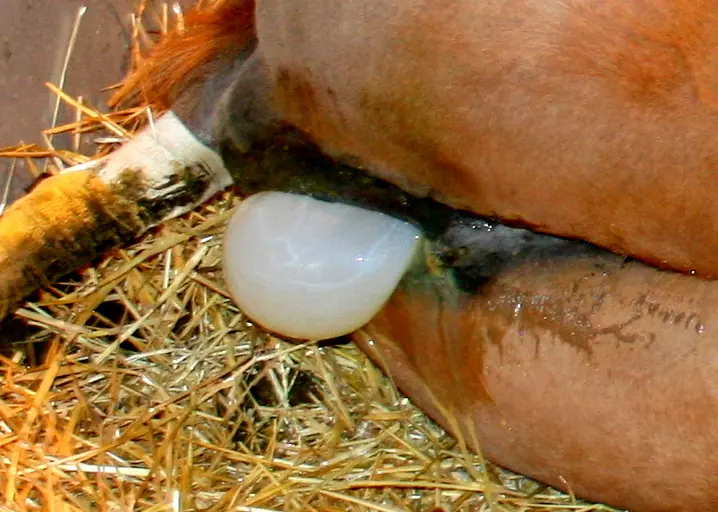
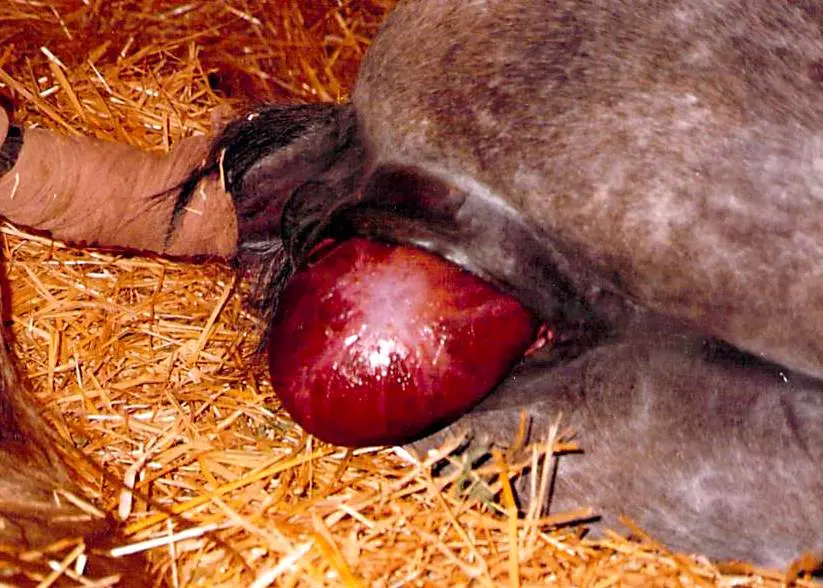
While horse owners hope for a smooth delivery, a number of complications can occur during labor and birth. One of those complications is known as “red bag foaling.” This is a serious, life-threatening situation and can result in a stillborn foal or a foal suffering from hypoxia (oxygen deprivation). Although relatively rare in healthy foaling mares, immediate attention is necessary when it occurs.
The mare’s placenta is made up of two major parts: the chorioallantois, also known as the red bag, and the amnion or white bag. During the pregnancy, the red bag is attached to the uterine wall, allowing the exchange of nutrients and waste to and from the fetus through the umbilical cord. The white bag surrounds the fetus, lubricating and protecting the fetus as the mare moves around throughout the pregnancy.
With a normal delivery, the red bag breaks just before the foal enters the birth canal. The white bag appears first, followed by the foal. If the red bag appears before the white bag, a portion of the placenta prematurely detached from the uterine wall. This is a critical situation, as the foal, still inside the mare, may experience a reduction or elimination of the exchange of nutrients. In order to save the foal, the red bag should be opened with surgical scissors or a sharp knife, exposing the white bag and the foal.
The feet and nose should be visible first unless the foal is breech (tail first), which brings other extremely dangerous implications. In either case, the white bag should be torn open to allow the foal to breathe until it is out of the mare and the umbilical cord is broken. If available, oxygen should be administered to the foal.
According to vetster.com, the prognosis depends on how quickly the foal is released from the placenta. Even foals released quickly are prone to have hypoxia and should be closely monitored for weakness, lack of sucking reflex, blindness, hyperexcitability, lack of interest in the mare, and awkwardness and/or inability or lack of desire to stand. Some of these may not appear immediately and take time to develop, and if the foal survives, it may require extensive care or hospitalization.
If a foal needs resuscitation before a veterinarian arrives, Dr. Alan Dorton of EquineChronicle.com advises lifting the foal — lying on its side with its head extended — by the muzzle, so it’s positioned at a 30- to 45-degree angle to the ground. Hold the mouth and lower nostril closed, then open the upper nostril and create a firm seal with your lips. Blow forcefully into the nostril, watching the chest to ensure the air is entering the lungs and not the stomach. If the chest isn’t rising and filling, the neck and head may need to be extended further.
Another major risk associated with a red bag delivery, or many other abnormal or complicated births, is sepsis — the body’s overreaction to an infection. This is also a risk for the mare, and a veterinarian should be consulted for treatment and close monitoring.
Premature placental separation from the uterine wall can be caused by placentitis, which is an infection or inflammation of the placenta. Bacteria can enter the mare through the cervix, or it can be transmitted through the bloodstream. Mares with this condition may show premature udder development or vaginal discharge.
Fescue toxicity is another cause of red bag deliveries. Mares who consume fescue grass late in the gestation period may also experience a thickened placenta, resulting in failure of the outer placental membrane to rupture during birth. Other problems associated with fescue consumption include prolonged gestation, lack of milk production, and larger but weaker foals with poor immunity and reflexes. Owners are advised to remove pregnant mares from fescue pastures 30–90 days before foaling due dates and provide grain and plenty of non-fescue hay.
Urine infections and stress can also lead to red bag deliveries. Mares should be monitored closely during the later stages of gestation. If it is necessary to remove the mare from the company of other horses, ensure the separation doesn’t cause stress for the mare. Pacing, inability to relax and frequent nickering can be signs that a mare would do well with a companion present.
Unfortunately, there isn’t much that can prevent a red bag delivery. Close monitoring during labor, preparation for potential complications, recognition of problems, and early intervention give the mare and foal the best chance for a safe birth. As labor approaches, it’s wise to alert your veterinarian and keep your truck and trailer hitched and nearby for quick transport if needed. Being prepared and knowledgeable ahead of time can lead to healthy outcomes even in an emergency situation.