by Dr. Kris Hiney, Equine Extension Specialist, Oklahoma State University
While February is recognized as National Equine Dental Health Month, caring for your horse’s teeth is a year-round necessity. Some aspects of horse care may change over time, but the fundamentals of equine health remain constant. First published in 2021, this article offers essential reminders for maintaining your horse’s dental health and overall well-being.
Smelly breath in our dogs and cats often encourages us to visit our veterinarian for a dental exam. Plus, we tend to get a better look into our dogs’ and cats’ mouths a bit more often than we do our horses.
For children, the beginning of the school year can be a reminder to visit the dentist, and our own dentists call or send texts to bring us into the office. But what about our horses? The drop in temperature can serve as a reminder for horse owners, as the horse’s teeth need to be in top shape for the winter and the potential increase in energy needs.
Teeth Facts
Horses begin their lives with no visible teeth, but they emerge quickly thereafter. Foals’ central incisors erupt at approximately 6 days of age, followed by the intermediate incisors at 6 weeks, then the corner incisors at 6 months of age. Along with these deciduous or baby teeth that you can see at the front of the horse’s mouth, the young horse will also have 12 premolars growing farther back in the jaw — six in the upper jaw (three on each side) and six in the lower jaw.
In essence, 24 teeth will be emerging in the first year of the horse’s life. We often think of dental care as an older horse issue, but malocclusions (jaws misaligned) may need to be addressed early. Therefore, having a dental inspection early in life may prevent issues down the road.
The wolf teeth are the next to make their entrance, typically between 6 and 9 months of age. These teeth are small, shallow-rooted teeth seated right in front of the premolars. Surprisingly, not all horses even acquire wolf teeth. These non-wearing teeth (i.e., they don’t assist with chewing) occur mostly in the upper jaw but can be present in the lower jaw as well.
These teeth are actually the first adult teeth (or permanent teeth) that erupt even though they may not be permanent for long! Young horses often have their wolf teeth removed and their teeth checked prior to starting under saddle since these teeth can interfere with the bit. Their removal ensures there is no discomfort in their mouth in a pivotal portion of their training.
Horses will begin to shed their “baby” teeth at about 2 and a half years old, and they do not have a complete set of permanent teeth until they are 5 years old. During this period of time, they will replace a full set of 24 teeth as well as gain 12 more true molars.
Often, caps of deciduous teeth may remain on the emerging permanent teeth and can create uneven eruptions or wear patterns in paired partners. The emergence of 36 permanent teeth within three years should be monitored by veterinary dental exams. Do not put dental care off until the horse becomes a senior citizen.
Canine teeth, not to be confused with wolf teeth, are the last set worthy of discussion. These teeth appear in the interdental space between the incisors and premolars in all male horses. Mares may also have canine teeth in variable numbers but are typically smaller than in males. Canine teeth should also be monitored, as they can become quite sharp and pointed and can cause lacerations within the mouth.
Unlike human teeth, horse teeth continue to erupt and wear down from chewing over the life span of the horse. As the long root of the tooth migrates down through the jaw, teeth may become loose or even fall out in older horses. As veterinary care and nutrition for horses has improved, it is possible for a senior horse to outlive his teeth.
Specialized feeds, which are more highly processed, can take the place of natural chewing action by the horse. With proper care and nutrition, horses can still lead happy, healthy lives with relatively few teeth.
The nature of the horse’s jaw and chewing patterns can create uneven wear surfaces that can be quite sharp and painful for the horse. As the upper jaw is wider than the lower jaw, the outer surface of the upper jaw and the inner surface of the lower jaw may develop very sharp points and ridges.
These can even lacerate the tongue and cheeks of the horse and can be quite painful. While we might think of only older horses needing routine dental care, regular inspection of the horse’s mouth may prevent discomfort and difficulty chewing.
Signs of Dental Disease
Some symptoms of dental disease point directly to the mouth. However, issues under saddle, such as not taking a lead or head tossing only in one direction, may also be related to dental problems. Horses may have dental disease without owners knowing it, especially as symptoms may be as subtle as behavior changes occurring slowly over time.
Pain in horses is often difficult to assess, as they are a species that tends not to show clear signs of discomfort. Many owners may not call the veterinarian to address dental disorders until signs are quite obvious, which indicates advanced dental disease. Dental disorders such as periapical dental infections (essentially a pocket of pus at the root of the tooth) may only be discovered during routine dental inspections or may even require X-rays.
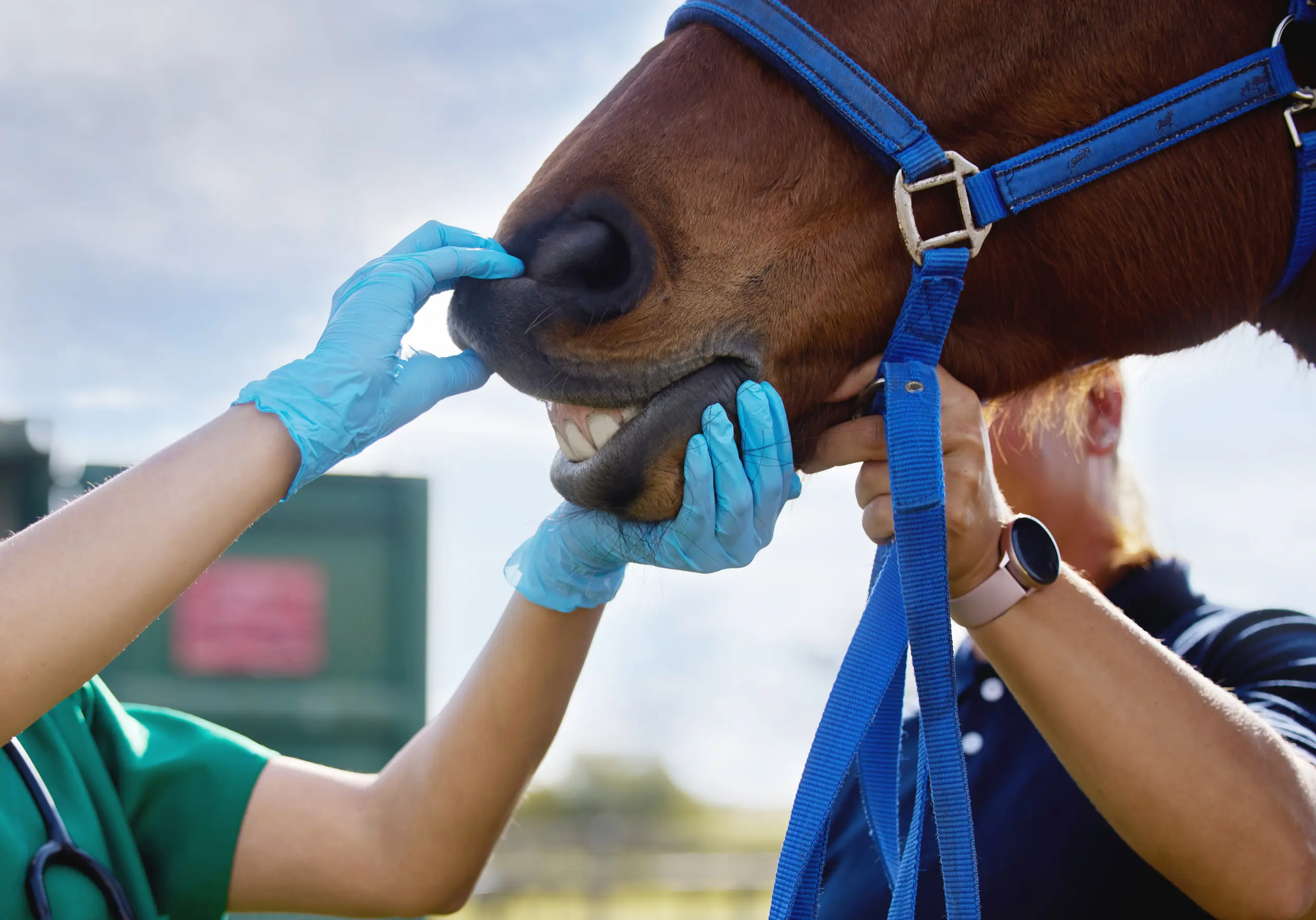
Horses demonstrating symptoms of dental disease often need sedation and the placement of a mouth speculum to visualize problems related to the disease process.
A study in Finland demonstrated the importance of identifying and addressing dental disease in horses. They surveyed horse owners on perceived behavior changes in their horses following tooth extraction of previously unidentified tooth abscesses.
As expected, many of the behaviors linked to feed consumption and pain, such as eating slowly, dropping feed or avoiding cold water, improved after teeth extraction (86% reported improvements). Bit-related behaviors also improved in 88% of the horses. These behaviors included evading the bit, differences in ability to bend and flex to the left or right, head shaking, opening the mouth and resistance to bridling.
The overall demeanor of the horses improved as well, with notable improvements in social behavior, reduction in aggression and a more positive expression of behaviors. Horses that had been fearful, bucked or were otherwise unpleasant to ride or care for, improved after addressing dental disorders. In particular, behavior issues that may be dealt with by harsh punishments were expressions of pain, which reduced following treatment.
Owners reported improved performance and weight gain. This study highlights the importance of considering a horse’s underlying health, including dental health, when addressing performance or behavioral issues.
Bottom line: Regular thorough inspection of the horse’s mouth is critical to horse health and well-being.
Sidebar
Care Notes
Typical symptoms of dental issues in horses:
- Weight loss, especially when relying on grain and hay.
- Dropping food while eating.
- Eating slowly, holding head to one side while eating and other abnormal chewing patterns.
- Slow to eat hay or dunking hay in water.
- Swellings on face and lower jaw.
- Nasal discharge from one nostril (usually no cough).
- Foul odor from mouth.
- Difficulty with position of head under saddle, poor collection, poor circular moves, fussy with bridle or bit, resistant on one side more than the other, head tossing.