by Ashley Daily | Photos courtesy of Equine Medical Associates
As members of the arachnid family, ticks are external parasites that attach themselves to a host and feed on blood. Ticks have a two-year life cycle, going through four stages of development — egg, larva, nymph, and adult.
In the spring, an engorged female lays eggs in what is known as a tick nest, a sticky cluster of eggs placed in some cases on a blade of grass or a leaf. Then the female abandons the nest. The nests are very small, about an inch or less across, and depending on the species, can contain 1,000 to 18,000 eggs. The eggs will remain clustered together until hatching, two weeks to two months after having been laid.
During each stage of development after hatching, ticks must take a blood meal, with larvae often feeding on small mammals such as mice, when they might become infected with B. burgdorferi, the bacterium responsible for Lyme disease, the most publicized tick-transmitted disease. Fortunately, Lyme isn’t very common in Oklahoma.
“That’s the one everyone worries about,” says Logan Kembel-Whitfield, D.V.M., of Equine Medical Associates in Edmond. “But according to all of the maps I’ve ever seen of Lyme disease, most of it is actually in the East Coast and Northeast.”
Research shows that the main transmitter of the bacterium is the nymph of the black-legged tick, a species abundant in Oklahoma. However, the nymphs in Oklahoma have been observed to feed mainly on lizards and snakes rather than mice.
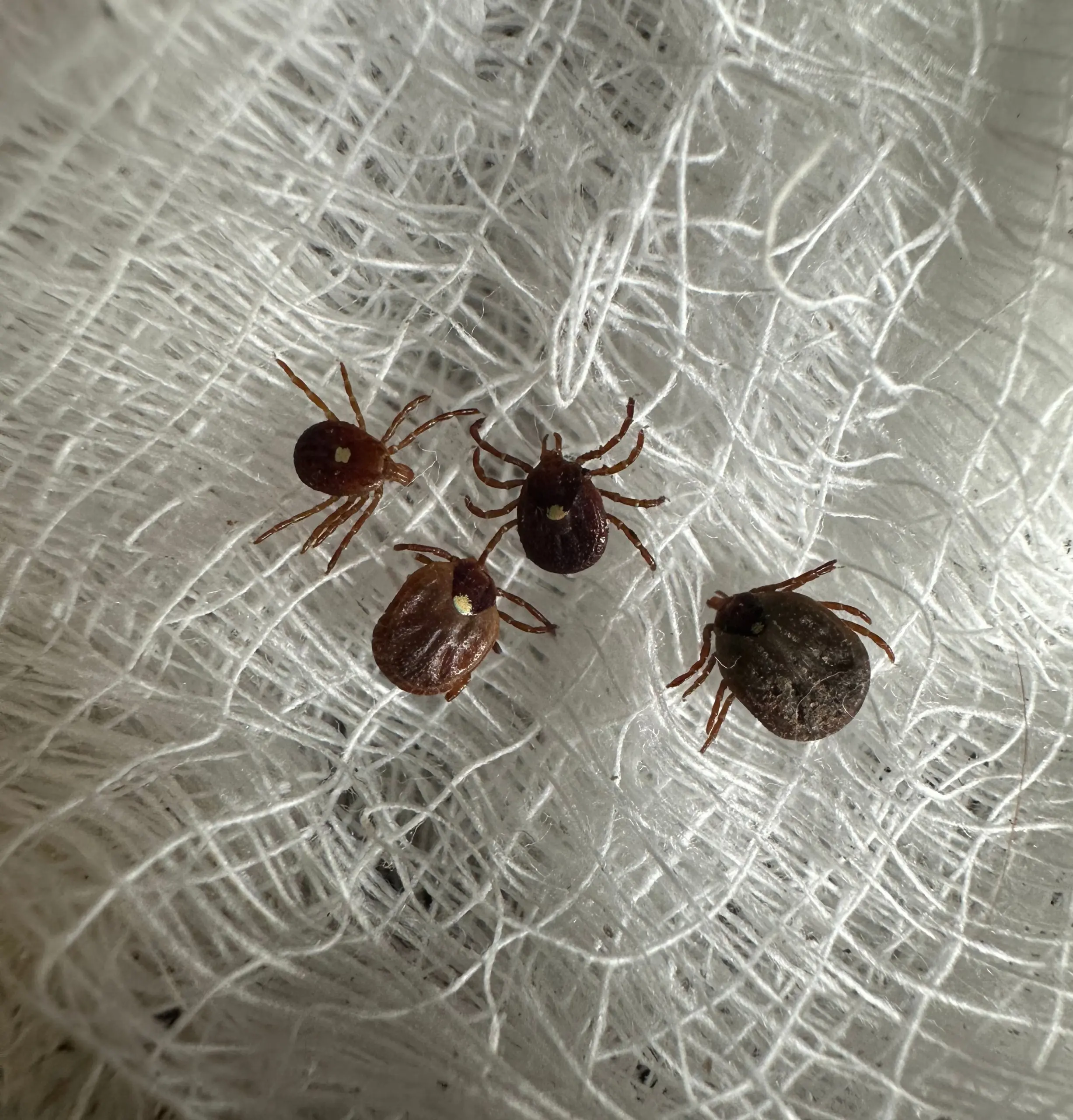
The American dog tick and lone star tick are two other species that are often encountered in Oklahoma.
Treating Infestation
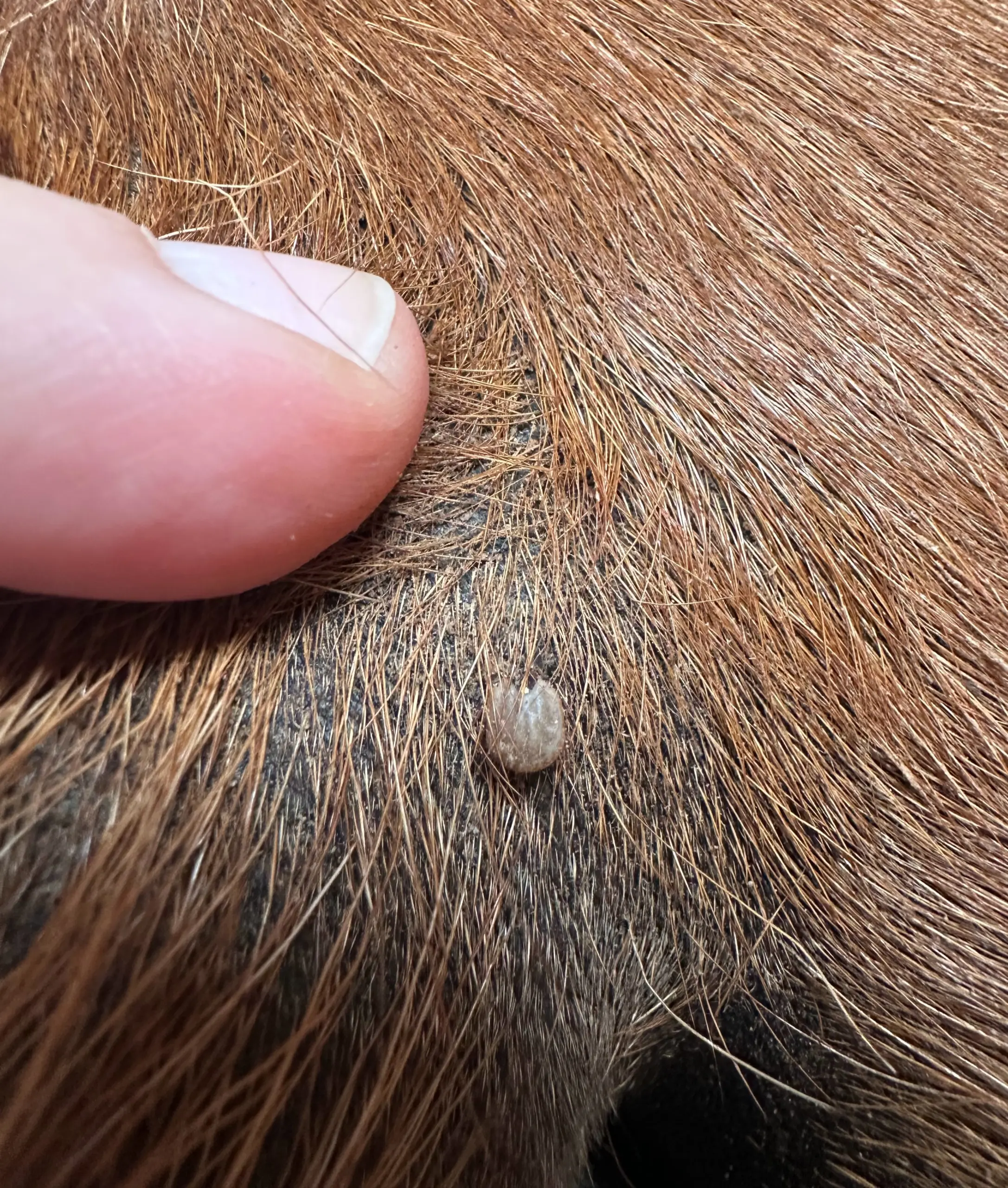
Tick infestation in horses can be common. Signs that a horse has a severe infestation can include weakness and pale gums. If you notice those symptoms, call your veterinarian immediately, and don’t try to remove any ticks because doing so could cause the horse to become stressed in his weakened condition.
Deworming agents are sometimes used to kill attached ticks.
“Ivermectin and moxidectin (Quest) are effective in killing ticks if they bite the horse. However, they don’t last a long time, so we typically don’t rely on that as a treatment,” says Kembel-Whitfield. She adds that dewormer might be beneficial for a horse that is covered in ticks, but a pour-on treatment, such as a permethrin-based product, is preferred.
When using any kind of tick repellent, read labels carefully. Some products might not be safe to use on foals, and many cattle products are highly toxic to horses.
Preventing Infestation
As with many things, prevention is best when dealing with ticks. Avoiding areas where ticks reside, such as long grass, and applying tick repellants before heading out on a ride can be beneficial. Kembel-Whitfield also advises owners to remove debris and fallen leaves from their property to reduce hiding places for ticks.
She adds that regular “tick checks” are an important part of management. Ticks have to be attached for approximately 24 hours for the transmission of disease to occur, making prompt removal key in protecting horses and humans.
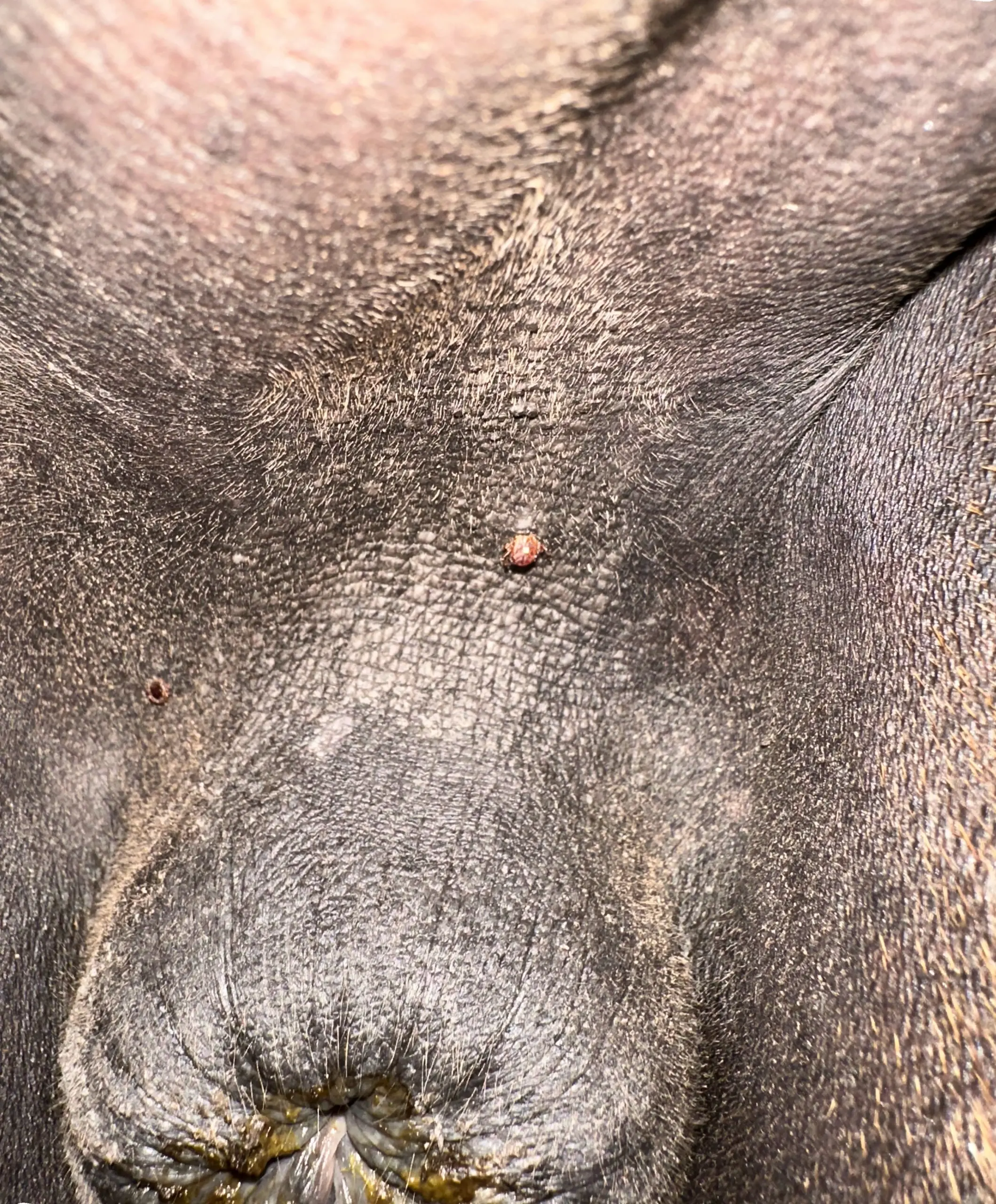
“Ticks like to live in the really thin-skinned areas, like under the tail and in the groin area,” Kembel-Whitfield notes. Owners should use caution when checking those areas because some horses might be more sensitive than others.
When removing a tick, grasp the tick’s mouthparts as close to the skin as possible, using a gentle upward motion without twisting. Tick-removal tools can also be used. Be careful not to squeeze the tick when removing it. That could cause the tick to regurgitate its meal, increasing the chance of infection.
Although it’s impossible to completely prevent ticks from attaching themselves to your horse, using a few preventive measures can help to ensure that summer plans don’t get interrupted too much by those bloodsucking intruders.