by Casie Bazay
Established in 1868 in the Choctaw Nation, Stuart Ranch started like many other early American ranches, with a
focus on raising a family, cattle, and crops.
Today, it is the oldest Oklahoma ranch under continuous family ownership. With two separate divisions based in Caddo, the original homesite, and Waurika, Stuart Ranch has not only found a way to survive for more than 150 years but also to thrive.
Although it started out much smaller, today the ranch operates on more than 46,000 acres and is home to the fifth, sixth, and seventh generations of the Stuart family. Since 1992, the ranch has been managed by Terry Stuart Forst, great-great-granddaughter of the original owner, Robert Clay Freeny. As a child, she grew up spending much of her time on the ranch but commuted with her parents to Oklahoma City regularly, where they did business and she attended school. She began to ride horses at a very young age and learned to shoot a gun and hunt. In fact, Stuart Ranch has a long legacy related to hunting, with Forst’s father, R.T. Stuart Jr., raising field-trial dogs and later hosting hunters at the ranch for outfitting experiences.
The Stuart Ranch Horses
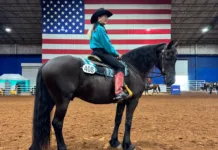
Horses have always been an integral part of Stuart Ranch. The family started out using them as plow and cow horses. However, in the early 1950s, R.T. Stuart Jr. purchased the ranch’s first registered quarter horse, a stallion named Big Shot Dun, establishing what would become a growing and wellrespected quarter horse program.
In 1961, Miss T Stuart, sired by Big Shot Dun, and another Stuart-bred mare named Pretty Sally were born. Today, mares in the Stuart Ranch broodmare band are all descendants of that original band purchased in the early 1950s.
The ranch’s broodmare band consists of about 60 mares that foal out every spring. The ranch also owns several stallions, two of which they stand to the public. Forst relayed that the ranch often breeds their mares to outside stallions to introduce new bloodlines. The goal is to continue to improve the herd’s genetics.
“Our mares are the most important part of our program,” said Forst. “We aim to produce a horse that is versatile, athletic, pretty, sound, and has good conformation.”
Forst’s younger son, Robert Forst, is the ranch’s primary horse trainer. He and his team have trained, shown, and sold award-winning cow, ranch, and rope horses.
Every August, Stuart Ranch hosts an online sale of colts and a few older horses, many of which go on to compete in reined cow-horse or roping futurities or simply become nice, enjoyable rides for the buyers.


Day-to-Day Operations
According to Terry Forst, day-today operations at the ranch are fairly seasonal. They have
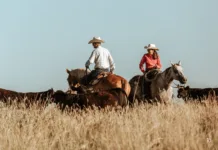
both a spring and fall calving season for their herds of Hereford, Baldy, and Corriente cattle. All calves born on the ranch are branded at about 30 to 60 days old. The ranch still uses the old-fashioned method that has been used for generations — roping and dragging calves to the fire to be branded, vaccinated, and castrated. Every April, the ranch begins breeding mares using artificial insemination. Also in April, the ranch staff get the previous
year’s colts ready for sale. After Thanksgiving each year, two-year-old colts are started under saddle.
“Life at the ranch is pretty scheduled,” said Forst. “Weather permitting, we brand at the same time each year, and we wean at the same time each year.”
A Diversified Agribusiness
Of course, operations at Stuart Ranch have changed dramatically over the years, more
out of necessity than anything else. The ranch began relatively small but had a large farming operation for many years. Once farming did not prove to be profitable, however, things had to be changed to increase revenue. Therefore, the Stuart family had to learn to diversify.
“If you’re willing to be only a status quo operator, you won’t survive,” said Forst, who is constantly seeking new and better ways to operate the ranch.
Today, Stuart Ranch not only runs cattle and horses but also continues to grow the outfitting division, operated by Forst’s older son, Clay Forst. Hunters from all over the world arrive seasonally for their chance at waterfowl, deer, turkey, and wild hogs.
The newest addition to the ranch, and one that Terry Forst is quite proud of, is a state-of-the-art lodge, built to house hunters who participate in the ranch’s outfitting experiences. Stuart Ranch also owns Stuart Ranch Meat Company and a line of highend western furniture, inspired by furnishings in the lodge.
Another opportunity the ranch is proud to provide is an annual long-range shooting event with John Wayne Walding, a decorated United States Army veteran who served for seven years in the esteemed Third Special Forces Group in Iraq and Afghanistan.
Challenges of Managing a Modern Ranch
Of course, managing a ranch the size of Stuart Ranch doesn’t come without its challenges. Forst notes that cash flow and weather are two challenges she must contend with on a regular basis. Managing resources presents another large hurdle. Jefferson County does not have groundwater, so that part of the ranch is completely dependent on surface water. That can pose a problem during droughts, which aren’t uncommon in Oklahoma.
“Knowing how to handle critical weather situations is important,” said Forst. “I’ve learned a lot over the years.”
In what has traditionally been a male-dominated industry, Forst has helped pave the way for women ranchers everywhere. Among her many accolades, she was inducted into the National Cowgirl Hall of Fame, served as president of the Oklahoma
Cattlemen’s Association, and was named the 2007 Oklahoma Cattleman of the Year.
Despite its many challenges and the 24-hour, seven-days-aweek nature of ranch work, Forst considers her job a privilege. “I love it all,” said Forst. “I’m totally passionate about [my job], and it’s such a blessing to be a steward of God’s creation.”
To learn more about Stuart Ranch, visit https://stuartranch.com/.