by Ashley Daily
Warmer than normal temperatures, high winds, and persistent drought fueled wildfires that spread across Oklahoma in March 2025, burning more than 170,000 acres and destroying more than 300 homes and structures. Evacuation orders were issued in several counties.
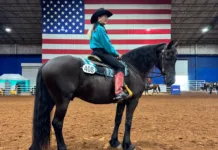
The equestrian team at Oklahoma State University, along with volunteers, safely evacuated 55 horses from its facility.
Cheri White Owl, who operates Horse Feathers Equine Center in Guthrie, came to the aid of neighbors in need of a safe place for their animals during the wildfires. White Owl transported seven horses, six head of cattle, six dogs, and one donkey to Horse Feathers. One steer calf had been singed, and one horse is receiving treatment for smoke inhalation.
Fleet of Angels
White Owl works as a moderator for Fleet of Angels (FOA), an award-winning 501(c)(3) nonprofit based in Denver, Colorado, dedicated to helping horse owners all over the country who have been impacted by natural disasters. Founded in 2012 by Elaine Nash, FOA ensures that evacuated equines receive food and care while displaced.
“When Fleet of Angels comes in, they’re in there for the long haul,” White Owl says, adding that the group is still assisting those affected by hurricanes in 2024. “They help with vet care, fencing material, water tanks. So it’s not just throw a bag of grain and a bale of hay at you. They help with ascertaining what all your needs are.”
FOA began as a directory of horse-trailer owners who were willing to transport at-risk equines to safety. “More and more things came to my attention when people needed help regarding horses and donkeys in crisis,” says Nash on the organization’s beginnings. “I realized I needed to raise some money so I could do more than just the directory. So I created a nonprofit, called it Fleet of Angels, and put the word out about some things we were interested in doing. And it just took off, more than I could have ever anticipated or imagined.”
Nash’s background involves marketing and promoting country-music artists, comedians, and actors. She also operated her own training facility while in college.
Nash notes that it sometimes takes a while for FOA to be contacted after a disaster because horse owners who have evacuated might not be able to return home for a few days and therefore won’t yet know what their needs are.
Effects of Oklahoma Wildfires
In response to the Oklahoma wildfires, Nash says FOA’s level of assistance will depend on how many horse owners were affected. “If enough people need help, we’ll be setting up a hay bank in Guthrie at Horse Feathers Equine Center,” says Nash. “If there aren’t a lot of people who have horses who were affected by the fires, we’ll instead provide grants to them.” Grants from FOA will buy hay or fencing material. However, the grants are not large enough to pay for rebuilding barns.
FOA owns nebulizers that can be loaned out for horses that have inhaled smoke, and the SmartPak company provides airway supplements.


Retta Risley, owner of Diamond Bar Ranch and Equine Rescue in Luther, a rescue dedicated to helping slaughter-bound equines, says the facility lost a four-month supply of hay that was stored on another property. The fire, heading 10 miles north of the facility, also destroyed more than 200 acres of a friend’s hayfield, which supplies Diamond Bar. Finding enough good-quality hay in March was a challenge, says Risley. “We tend to hold a lot of orphans and pregnant mares, so we can’t just feed any quality.”
High winds, some reaching 70 mph, also resulted in the destruction of field shelters and fences.
Diamond Bar has set up a GoFundMe page. As a 501(c)(3) nonprofit, the rescue relies on donations to care for the animals.
Risley is grateful that Diamond Bar did not have to evacuate. “We have about 30-plus animals, so we would have had to figure out how to evacuate. We were working on a plan, but we are extremely grateful we didn’t have to leave.”
Evacuating with animals is stressful, but steps can be taken well in advance to help things run a little smoother if your area comes under evacuation orders. Making sure your horses load willingly into a trailer is key, as is making sure you have enough food — and if possible, water — to last seven to 10 days.
The American Society for the Prevention of Cruelty to Animals recommends having your horses become accustomed to being handled by strangers, including members of your local fire service if possible. The turnout gear worn by firefighters can smell and look unusual, which can frighten horses, so asking firefighters to wear their gear is a big help in the training process.
By doing some preparation and planning, evacuating can be a little less stressful for everyone involved.
For more information on how Fleet of Angels helps horses affected by natural disasters, visit fleetofangels.org.