by Andrea Chancellor | Photos courtesy of Barbara McAlister

When she was eight years old, Barbara McAlister received a horse as a Christmas present — a registered Hambletonian trotter who could not race anymore because of an injury.
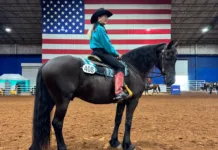
She already loved the horse, named Pete, and often had ridden him in a neighbor’s pasture. It was quite a surprise to receive Pete for Christmas as her very own. From then on, she spent most of her time after school and church with Pete and participating in Muskogee Roundup Club (MRC) activities.
McAlister, of Cherokee descent, changed horses over the years, acquiring Red Fox and Sunny Mac. Then came Dana, a palomino, who appears in many photos in a packed scrapbook of McAlister’s horse memories.
It was the mid-1950s, and the MRC has changed somewhat, remaining popular during the decades for horse enthusiasts. However, it did experience good years and slow years.
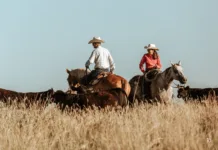
Today, McAlister still sings the praises of learning about horses and her early riding experiences at Muskogee Roundup Club.
Finding Parallels
Evidently, McAlister developed stage presence while riding a horse, and that, along with other horsemanship skills, has remained with her. But her interest eventually turned to music. She can easily say horseback riding helped her develop skills that came into play as she grew to be an acclaimed mezzo-soprano.
The relationship and collaboration skills McAlister learned in horseback riding still pay dividends. “Sometimes I think riding a horse at a good gallop is similar to singing operatic music with the … words flying out, telling the story,” she said.
One skill in riding is balance. McAlister put balance to the test in a Verdi opera, La Forza del Destino (The Force of Destiny) playing Preziosilla. “I had to jump from the platform onto a bale of hay — in boots with heels,” McAlister said. Singing all the while, she did not fall off as cameras snapped the feat.
“I learned how much I enjoyed grand entrances” into the horse arena and onto the stage, she added. Training and commitment to performing before crowds helped McAlister mature. “I was fearless…. The announcer would say I rode so great.”
McAlister also developed a liking for barrel racing. It’s similar to “how I felt once I finally learned how to sing with a rock-solid vocal technique.”
Perhaps riding provided stamina that allowed her to “rehearse (music) hours a day and not tire.”

Traveling and Performing
As an adult, McAlister developed a full-bodied, rich dramatic mezzo-soprano voice that carried to the farthest reaches of an opera house. She traveled the globe and lived in New York for 20 years.
While on tour, she went riding a couple of times on a dressage horse with the English saddle. “It’s just not the same as our wonderful Oklahoma horses,” McAlister said.
She lived and sang in Germany, moving every year or two from Passau to Koblenz to Flensburg to Darmstandt to Bremerhaven to New York.
McAlister described reminiscing about opera as “going back in time to mostly wonderful memories.”
Artist and Influencer
In addition to being an acclaimed singer, McAlister is accomplished in other artistic ways. She has sculpted Native American art pieces and produced an extensive collection of wall art. Many of her works are for sale on the Internet, to the joy of treasure hunters. McAlister’s artwork has included native scenes that feature horses.
McAlister is now retired from stage opera, but she is still considered an influencer. She teaches young aspiring Native American vocalists and performers as a voice instructor for the Cherokee Nation.
And she often reflects on her horsemanship training in the Muskogee Roundup Club and her early love of horses.