by Josie Correll
Inside a packed Tulsa arena the crowd roared as silver saddles glistened under the bright lights. From the stands, 19-year-old Leonard Berryhill watched in awe as some of the best youth riders in the country competed at the 1976 American Quarter Horse Youth Association World Show.
The energy, the horses, the excitement — it all struck a chord, changing the course of his life. More than four decades later, the spark has turned into a lifelong career.
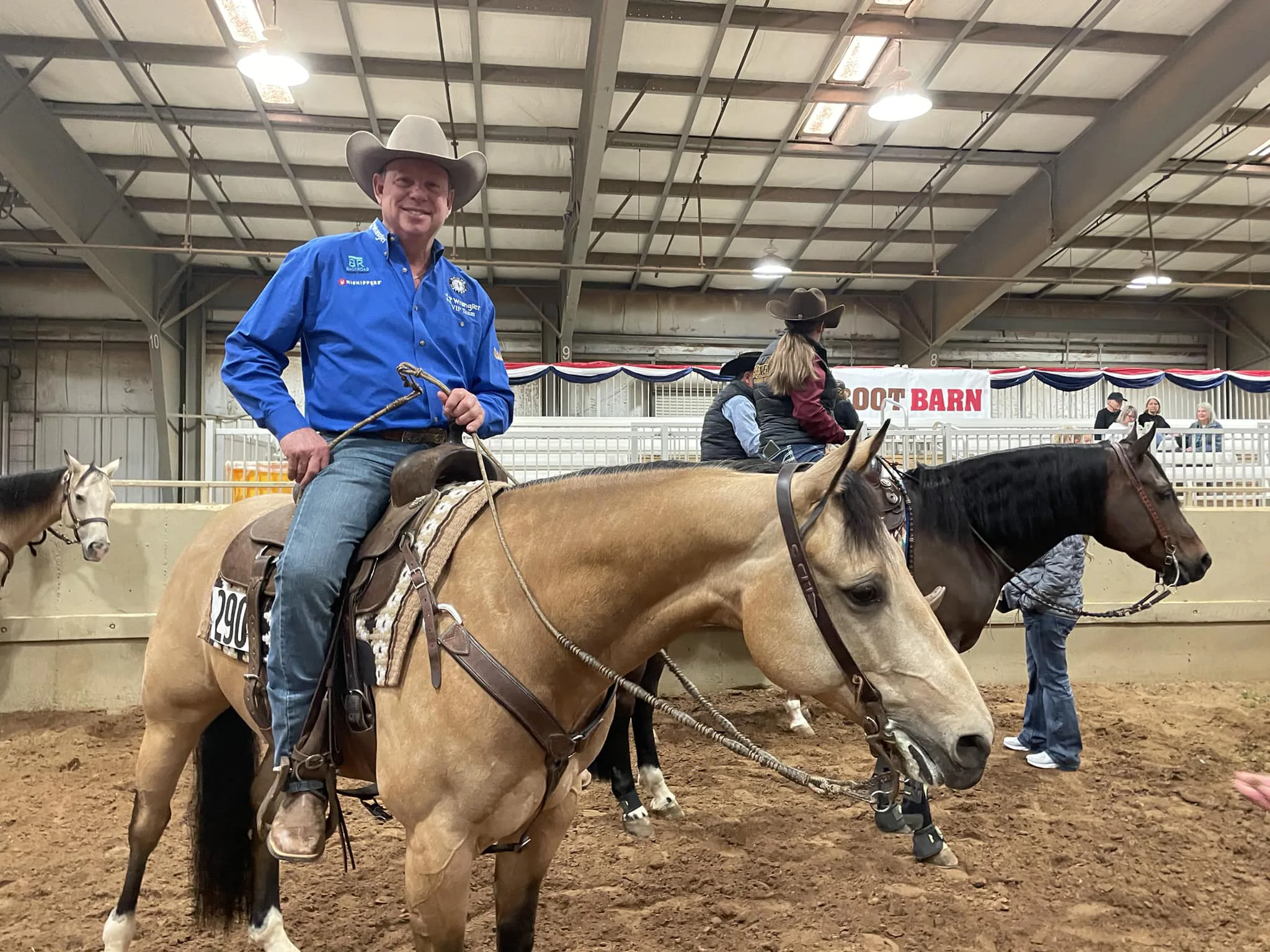
Today, Berryhill is a trainer, judge and coach in the American Quarter Horse industry and served as president of the Oklahoma Quarter Horse Association in 2018.
“I’ve been showing horses at the AQHA World Show for 44 years,” Berryhill said.
Growing up just four miles from downtown Tulsa, Berryhill was surrounded by horses, though he didn’t yet realize the role they would play in his future. His parents, blue-collar workers who shared a passion for the industry, began raising and showing horses in the early 1970s. As a teenager, Berryhill often led colts into the show ring for his parents, never imagining he would one day make a career of it.
“Up until then, I wanted to be a baseball player or [do] something other than ride horses,” he said.
Sitting in the arena in 1976, Berryhill realized he wanted to see what the horse world had to offer. By then he already had an advantage, having spent years roping, rodeoing and working around horses. His parents also had horses in training for Western pleasure at the time, he said.
Berryhill’s father suggested bringing home a stallion that was being trained elsewhere and letting him start showing it. He took a few lessons from Margret Hudspeth, and by 19, Berryhill was showing and riding horses for his parents while gradually working his way into training.
“When I got out of [high] school,” Berryhill said, “I went to a couple years of college and decided that really wasn’t for me.”
After leaving college, Berryhill knew two things: he wanted to work outdoors and with horses. Wanting a career that allowed him the freedom to rodeo while continuing to gain experience in the show ring, he learned to shoe horses. The skill not only supported him financially but also kept him close to the lifestyle he loved.
Over the next few years, Berryhill continued to rodeo, shoe horses, and ride pleasure horses more consistently. But the horse he had been showing grew restless with the slower-paced work, so Berryhill began roping off him instead.
“In 1982, I won reserve world champion in the calf roping at 24 years old at the AQHA World Show,” Berryhill said.
The following year, he rode Skip N General, a son of the stallion he had previously won a championship on, to claim the Western Riding title at the AQHA World Show and the Junior Western Pleasure title at the inaugural Palomino World Show.
As Berryhill established himself in the show world, many mentors guided him along the way. Although he was unable to work for a well-known trainer because his family needed him at home, he was not afraid to seek advice from the professionals he admired.
“I would walk up to Bob Avila [and] Al Dunning and ask questions,” Berryhill said. “They were always just more than willing to take me aside [and] show me what I needed.”
Through his years of showing and involvement with the OQHA and AQHA, Berryhill met his wife, Leigh. “Our shared passion for horses is what brought us together,” she said.
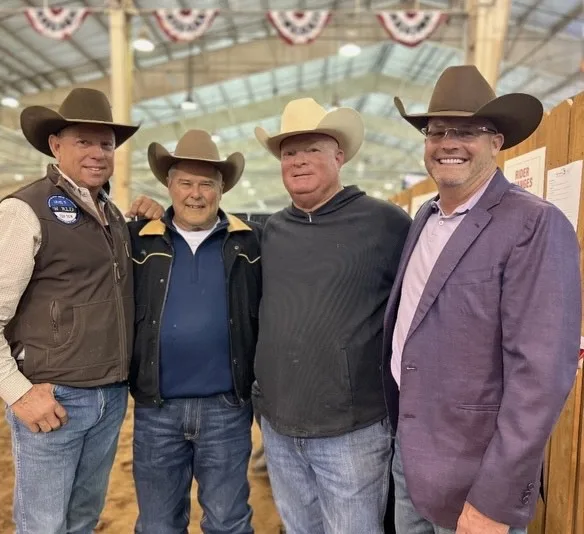
Today, the Berryhills own and operate Berryhill Quarter Horses in Talala, where they develop Western performance horses for all-around events. Along with their daughter-in-law, Mandie Berryhill, they work together to condition and prepare the horses for competition.
Berryhill said he credits his wife and daughter-in-law for taking the lead in teaching students and showing the horses while he focuses on training.
“The way I train my horses is what the horse needs,” he said. “I don’t have a cookie cutter style. It’s not my way or the highway.”
He begins training most horses in Western pleasure, and he makes adjustments over time based on each horse’s personality. Some horses thrive in all-around or Western riding classes, while others want more action and turn out as great rope horses.
“We are still relevant because we still place and win at the big [shows],” Berryhill said.
Beyond major national shows, the Berryhills have remained connected to their local horse community through the OQHA Tulsa Spring Show, an event Berryhill said he has attended for as long as he can remember.
“My wife and I have been married 34 years, and we’ve been involved with that show every year,” he said. “It’s always been a fun show and a chance to see people we don’t often get to see.”
For the Berryhills, the Tulsa Spring Show is about more than competition. Rather, it provides an opportunity to showcase their clients and young horses in a relaxed, friendly atmosphere.
“It’s not unusual for us to take 14 or 15 horses there,” he said. “It’s more about our local customers than it is about us.”
Although the show has continued to grow throughout the years, it still offers a relaxed environment, allowing the Berryhills to enjoy the experience without the pressure of larger competitions, he explained.
Berryhill is widely respected within the industry for his integrity, strong character and versatility, said Jackie Krshka, OQHA show coordinator. Before becoming known for his success in Western riding, Berryhill built a reputation as a skilled and accomplished roper, giving him a well-rounded background in multiple disciplines.
“There is a lot of difference in a trainer and a true horseman,” Krshka said. “He could train anything, no matter what kind of horse you give him.”
Training horses has been Berryhill’s lifelong work, fueled by his love for the animals and for teaching. He enjoys shaping horses to perform at their best and thrives on the competition and camaraderie of shows, where he can reconnect with friends and fellow trainers.
Looking ahead, the Berryhills are gearing up for the 2026 Spring Show.
“I’ll be there,” Berryhill said. “Berryhill Quarter Horses will definitely be represented well.”
Oklahoma Quarter Horse Association
The Oklahoma Quarter Horse Association’s Spring Show started in the 1960s. The event continues to emphasize community, providing opportunities for local exhibitors while still attracting respected trainers from across the region.
Competitors can earn five sets of American Quarter Horse Association points, and the show is AQHA, OQHA, Kansas Quarter Horse Association and National Snaffle Bit Association approved.
Events include Trail, Showmanship, Western Pleasure, Horsemanship, Ranch Riding, Reining, Hunter Under Saddle, Equitation, Halter and Special Event Roping (six judges).
Show Rules and Regulations
- Current AQHA membership and registration papers will be required at check-in.
- Youth and amateur exhibitors must include birthdates on entry forms.
- Social Security numbers or tax IDs may be required for prize money.
- The Spring Show remains dedicated to supporting OQHA members and welcomes exhibitors from across Oklahoma and beyond, said Jackie Krshka, OQHA show coordinator.
- The 2026 OQHA Spring Show will take place April 1-4 at the Tulsa State Fairgrounds.