by Josie Correll
Photos courtesy of OSU College of Veterinary Medicine
Biomedical lasers, once reserved for operating rooms and advanced research, are now part of the everyday conversation in equine sports medicine and rehabilitation.
Light has become more than a diagnostic tool; for many veterinarians, it has become a treatment as well, said Daniel Burba, DVM and Oklahoma State University McCasland Professor of Biomedical Lasers.
With growing interest in non-invasive therapies for soft-tissue injuries, veterinarians are turning to low-level laser therapy, also known as photobiomodulation, to complement traditional treatment plans.
“When you are looking at biomedical lasers, that actually covers two areas,” Burba said.
Biomedical lasers vary in power, wavelength and purpose, but most fall into two categories: surgical and therapeutic.
Surgical strength lasers cut, coagulate and cauterize. Therapeutic lasers, especially class IV units like those used in equine rehabilitation, deliver specific wavelengths of light designed to influence cellular activity, Burba explained.
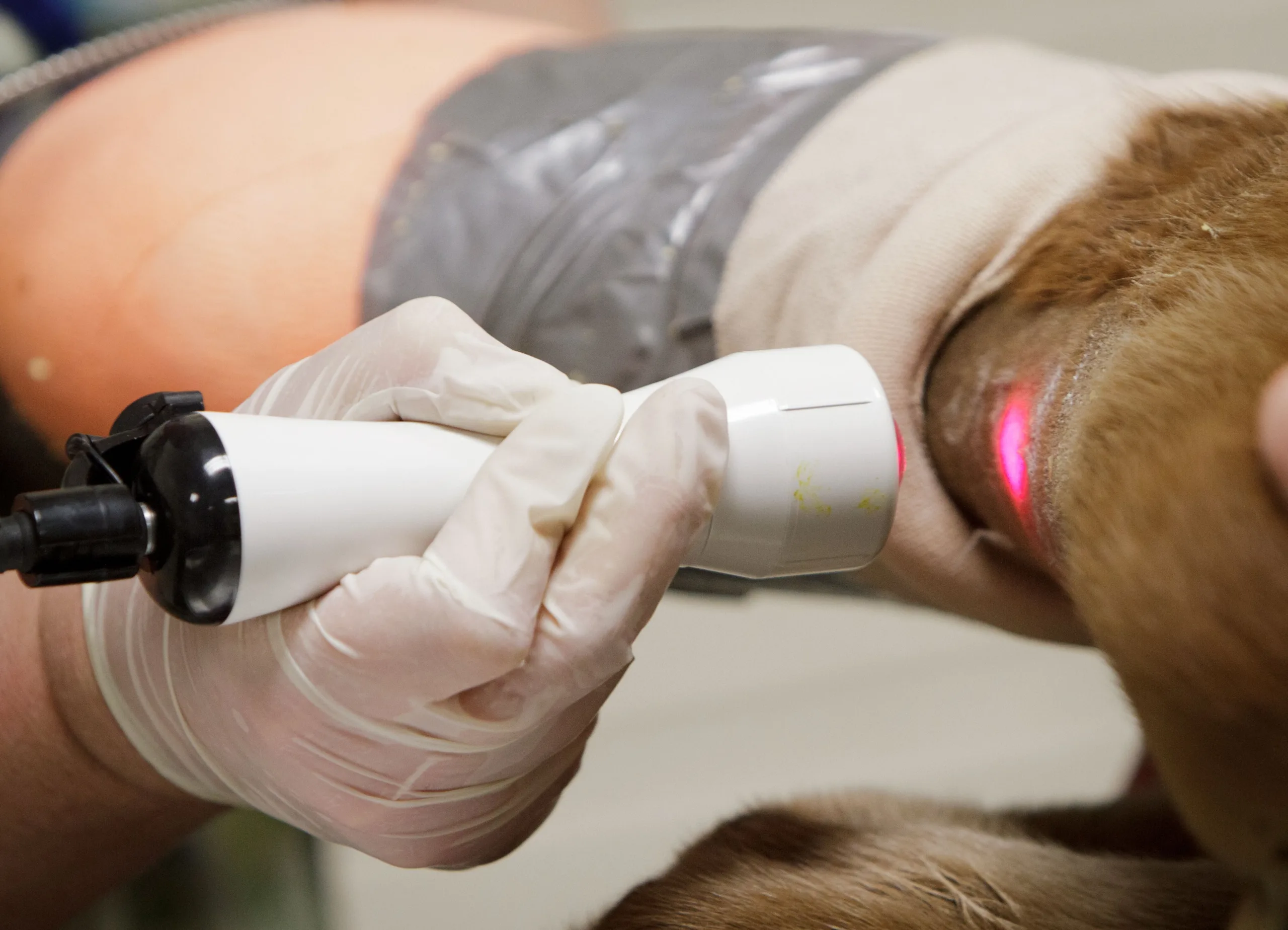
As technology has advanced, portable handheld units now allow veterinarians to perform treatments in clinics, barns or even at events, making laser therapy more accessible for equine athletes.
Many of these devices available to veterinarians are class IV low-level lasers, such as those made by Companion, Summus, Erchonia or LumaCare. These systems use near-red or infrared wavelengths to penetrate tissue.
“The lasers’ [wavelengths] are [actually] invisible to the naked eye,” Burba said. “Although there is a light you can see when you are applying it, that just gives the person [applying the treatment] knowledge where the target area is.”
The lasers function by delivering precise wavelengths of light that penetrate the skin and are absorbed by the cells in the targeted tissue. This energy activates the mitochondria, boosting cellular metabolism and supporting repair processes, such as collagen formation, tissue regeneration and a reduction in inflammation.
“We do know that it can excite cells,” Burba said. “When you’re exciting cells in an area of injury, the cells will then try to repair the injury.”
Laser therapy is most commonly applied to soft-tissue and musculoskeletal injuries, with many of these cases involving tendons or ligaments in a horse’s leg. Leg injuries also typically respond best to laser treatment because the light does not have to penetrate as deeply under the skin to reach the affected area.
Skin wounds are also an area laser therapy may be applied to encourage healing, Burba said. Energy provided by laser treatment can optimize and promote quicker healing to the affected area.
“We had a horse cut his lip, exposing teeth,” said Tess Mortenson, horse trainer. “We used laser therapy on him. Instead of taking months to heal, he was fully healed in just a few weeks with no scars.”
Stories like Mortenson’s show the potential of laser therapy to speed up healing, but professionals emphasize that outcomes depend on proper use and frequency of treatment.
“When you’re talking about laser therapy, you really need to consider that multiple treatments are going to be better than just one or two,” Burba said.
Severity of the injury will determine the number of laser treatment sessions needed and the frequency the sessions are applied, Burba said. For particularly severe tendon or ligament injuries, a horse may require four to eight treatment sessions spread over several weeks for the best result, he added.
“Even though laser therapy will help improve the blood flow to these injured areas, the horse is still restricted by their anatomy.”
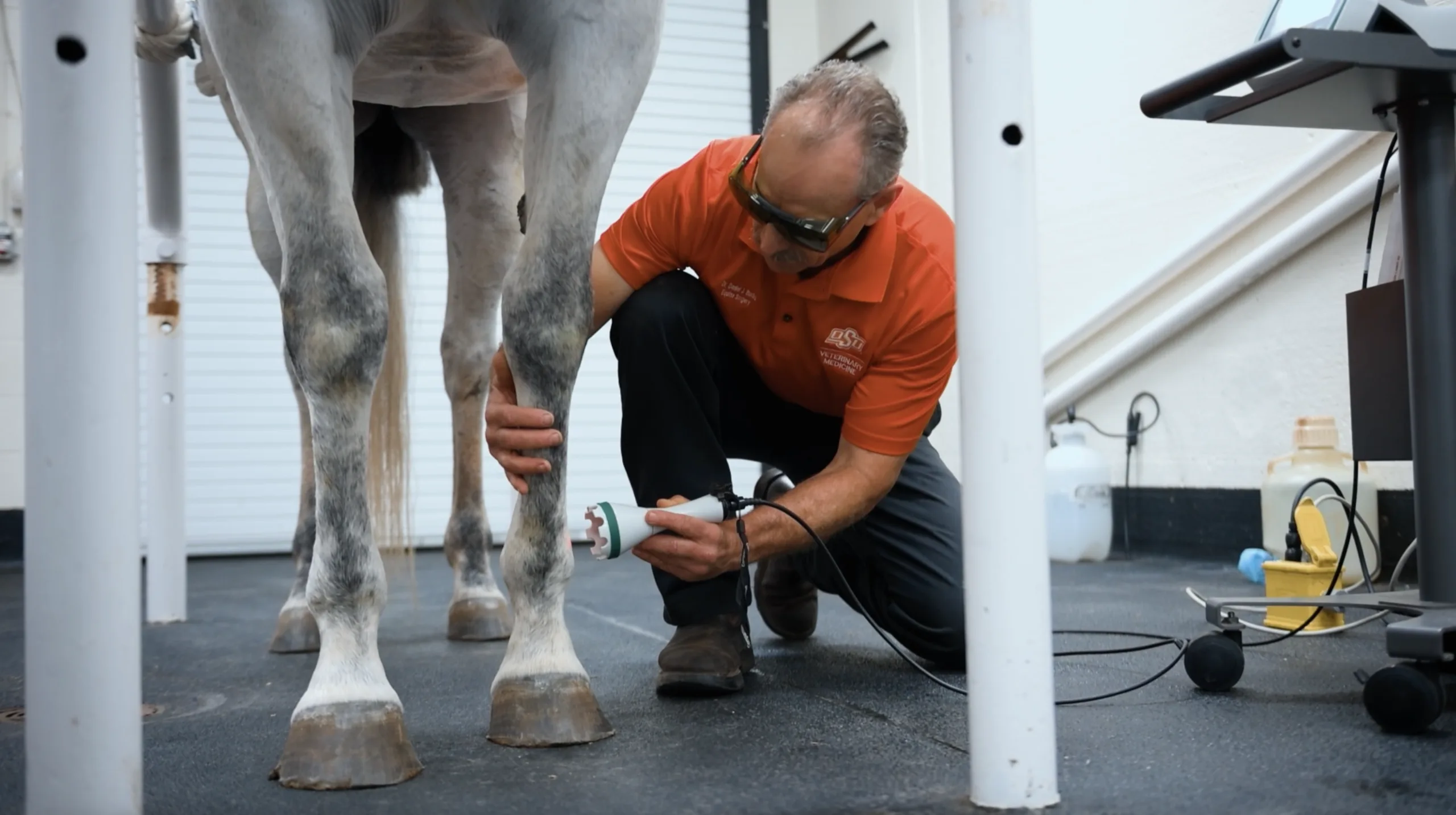
After an injury occurs, laser therapy will not benefit fresh injuries because the swelling will prevent penetration of the laser. Cold therapy, bandaging and a systematic anti-inflammatory are some of the approaches to reduce swelling in an acute injury, he added.
“As [the injury] initially calms down,” Burba said, “that is when laser therapy actually becomes more beneficial.”
Although laser therapy can be used on its own, when paired with other treatments, it can become even more effective. Pain management, physical therapy and chiropractic care are examples of approaches used alongside laser therapy.
When comparing low-level laser therapy with ultrasound, shockwave or chiropractic care, each treatment targets different tissues or conditions. Chiropractic focuses on joint manipulation to reduce pain, while shockwave therapy can be used for soft-tissue injuries as well as certain bone-related issues.
“Unfortunately, laser therapy doesn’t have the ability to penetrate through bone or into bone,” Burba said.
Laser treatment also should be avoided on eye injuries and sarcoids, a common type of skin tumor, Burba cautioned. While research on how sarcoids respond to laser therapy is limited, there is a possibility the treatment could stimulate unwanted tumor activity, he added.
“We, as practitioners when we use [laser treatment], try to avoid application around sarcoids,” Burba said.
Anyone operating a therapeutic laser should have a solid understanding of how the device works, basic laser safety, and proper application techniques. Although formal certification is not required, training is still essential, which is why new veterinarians, interns and residents at OSU receive instruction before using the equipment. Operators must follow safety precautions, such as wearing protective eyewear, to prevent accidental exposure to the beam.
“One of the things you have to be careful about when you’re using low-level laser therapy is you can create thermal burns to the skin if it is applied for too long in one area,” Burba said.
Recent studies confirm that hair characteristics influence laser effectiveness.
“[Hair color and length] really has quite the impact on the transmission of that therapeutic light into the tissues,” Burba said.
In situations where laser therapy is appropriate, clipping the hair around the treatment area may be recommended to help the light penetrate more effectively, Burba added.
A typical laser session lasts about five to 10 minutes, depending on the size of the area being treated and the amount of energy needed. Using a handheld unit, the veterinarian applies a controlled dose of light, measured in joules, and keeps the dosage consistent across sessions to maintain effective treatment levels, which most horses tolerate well.
Today’s low-level laser units are becoming more precise, with manufacturers refining how light reaches target tissues.
“The newer models that are coming out now are actually moving toward more optimal wavelength to achieve more therapeutic penetration of light transmission,” Burba said.
For veterinarians and horse owners alike, low-level laser therapy offers a noninvasive way to support healing while keeping horses comfortable and moving forward.