by Carol Mowdy Bond
Photos by Clay Mowdy
During the 19th century, many family lineages originated in Indian Territory. Today, their descendants still recount the stories of their hardscrabble ancestors. Popular yarns like “True Grit” and “Lonesome Dove” later helped immortalize southeastern Oklahoma’s Old West culture, highlighting historic Red River and Indian Territory locations.
One factor that contributed to new family lineages involved the removal treaties, which forced the Choctaw to begin leaving their southeastern U.S. homelands and arriving in Indian Territory during the early 1830s. Self-governed, Choctaw Nation divided its new Indian Territory land into counties and districts.
However, with Choctaw Nation’s 1866 Reconstruction Treaty, a whirlwind of change ensued. Many men emerged who were white or of mixed European and Native American ancestry. As Choctaw Nation’s population exploded, dissention occurred, sometimes involving those who entered the Nation through marriage. At the same time, men built cattle kingdoms, and some prospered in coal and transportation. Coalgate became one of Choctaw Nation’s four primary mining towns.
But cattle rustlers were prevalent, with a hotbed centered in the Marietta area near Coalgate. Nearby Robbers Cave also housed outlaws, many of whom were evading the reach of Fort Smith’s Judge Isaac Parker, who presided over Arkansas and Indian Territory from 1875 to 1896.
Coalgate was just 34 miles from Boggy Depot, a bustling Indian Territory hub of commerce and activity. Boggy Depot sat at the intersection of several major transportation routes through Indian Territory.
Within this saga, Texas cattleman Frank Mowdy heard about Choctaw Nation’s open range. So during the summer of 1886, Frank drove his cattle north from Tyler, Texas, swimming his beeves across the Red River and into Choctaw Nation.
A local Choctaw man helped Frank situate his cattle between Keel and Salt creeks. The land included tall grass prairie with native bluestem so tall that it was said “it would get your knees wet when riding in the morning on a tall horse,” and that “great oak trees grew on the rocky tops of the hills.”
Despite grass fires and cattle thieves plaguing the area, Frank grazed his cattle for about 18 months. In the fall of 1887, he drove his cattle to market in Fort Worth and returned home to Tyler. He also recruited his three brothers to drive another herd of cattle and horses back into Choctaw Nation.
Somewhere in the story, Frank met Viola Alexander. Viola grew up near Caddo, Indian Territory, and her Choctaw family tree merged with Choctaw Mississippi homelands and Choctaw Chief Moshulatubbee. After her parents died, Viola lived with her aunt and uncle who operated a ferry and store on the north side of the Red River.
Frank and Viola married and reared 12 children in their two-story home. They also farmed, ranched and raised Percheron and Morgan horses. When Frank died, the horses were sold or traded, but their big black Morgan stallion, Ol Coaly, stayed on the ranch for the rest of his life.
Viola and her nine oldest children received Choctaw land allotments, which made up part of their Mowdy Ranch near Coalgate in today’s Coal County. Coal County was carved from the Pushmataha District’s Shappaway County, Choctaw Nation.
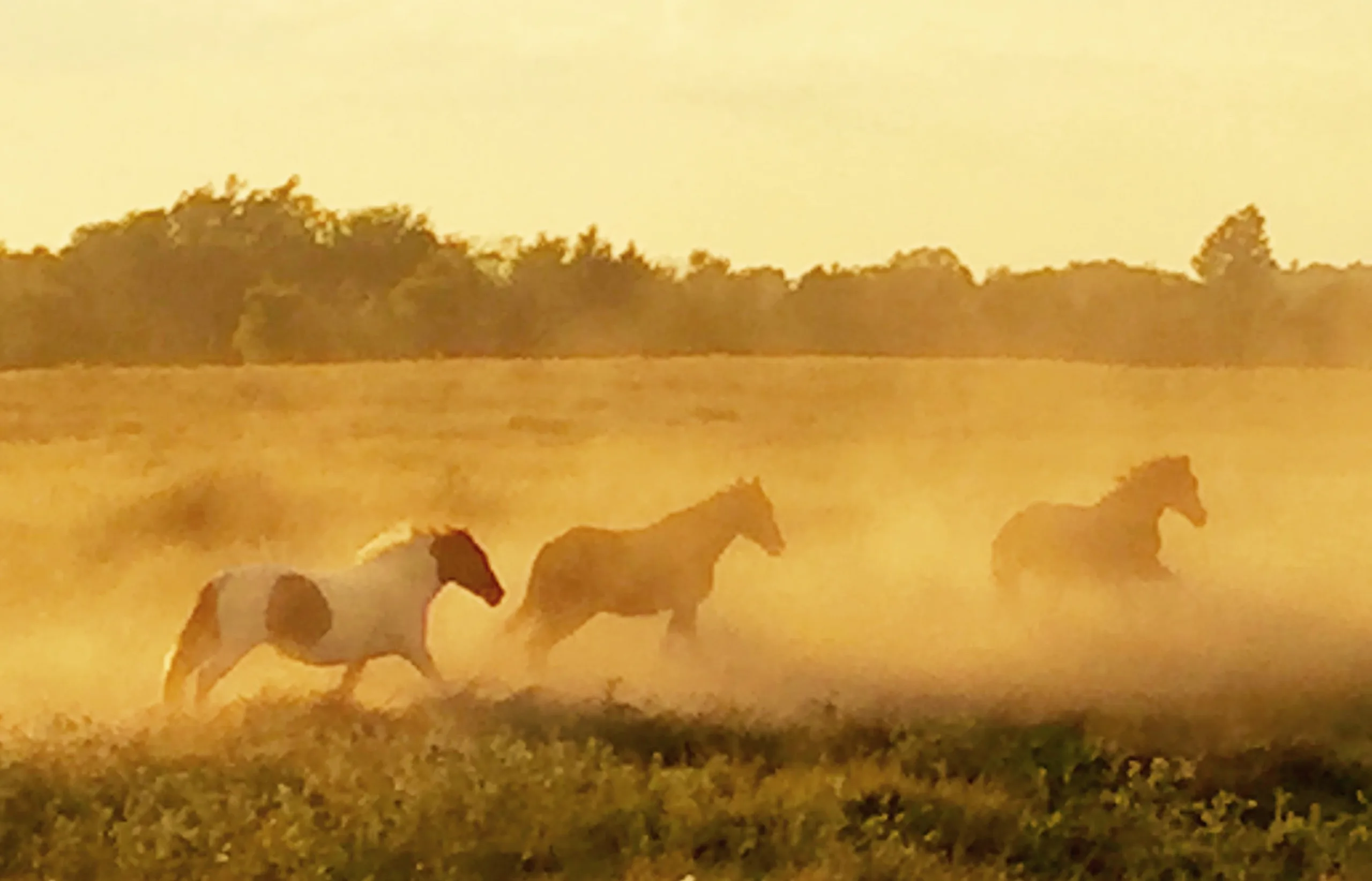
Today, the family legacy continues through their great-grandson, Clay Mowdy, who says horses always played an integral role on Mowdy Ranch.
“I grew up working on this ranch with my father, mother and two sisters,” he says. “We did everything on horseback. During my grandfather’s and father’s eras, we always kept 10 to 15 riding horses. We used horses daily except during the coldest parts of winter. My grandfather always kept two or three mules to plow the garden. The winter I was 10 years old, it was my job to hitch up the mules, and one used to kick.”
These days, Clay and his wife Kit own Mowdy Ranch. They met at Oklahoma State University, and after graduation, they moved to the ranch, as he says, “There was never any question that I would return to the ranch to live.” They raised their three children — now adults — as the fifth generation on the ranch.
In 2013, Clay learned about the Bureau of Land Management’s (BLM) Wild Horse and Burro Program. The BLM works to place excess animals into private care through its Adoption and Sales Programs and also through partnerships with U.S. organizations. The agency’s process ensures adopted wild horses and burros go to good homes, and it has placed nearly 290,000 wild horses and burros into private care since 1971. Many have successfully become pleasure, show or work horses.
By 2014, Mowdy Ranch had become the BLM’s second U.S. wild horse eco-sanctuary open to the public. Now as one of only four such U.S. sites, the ranch is a Public Off Range Pasture.
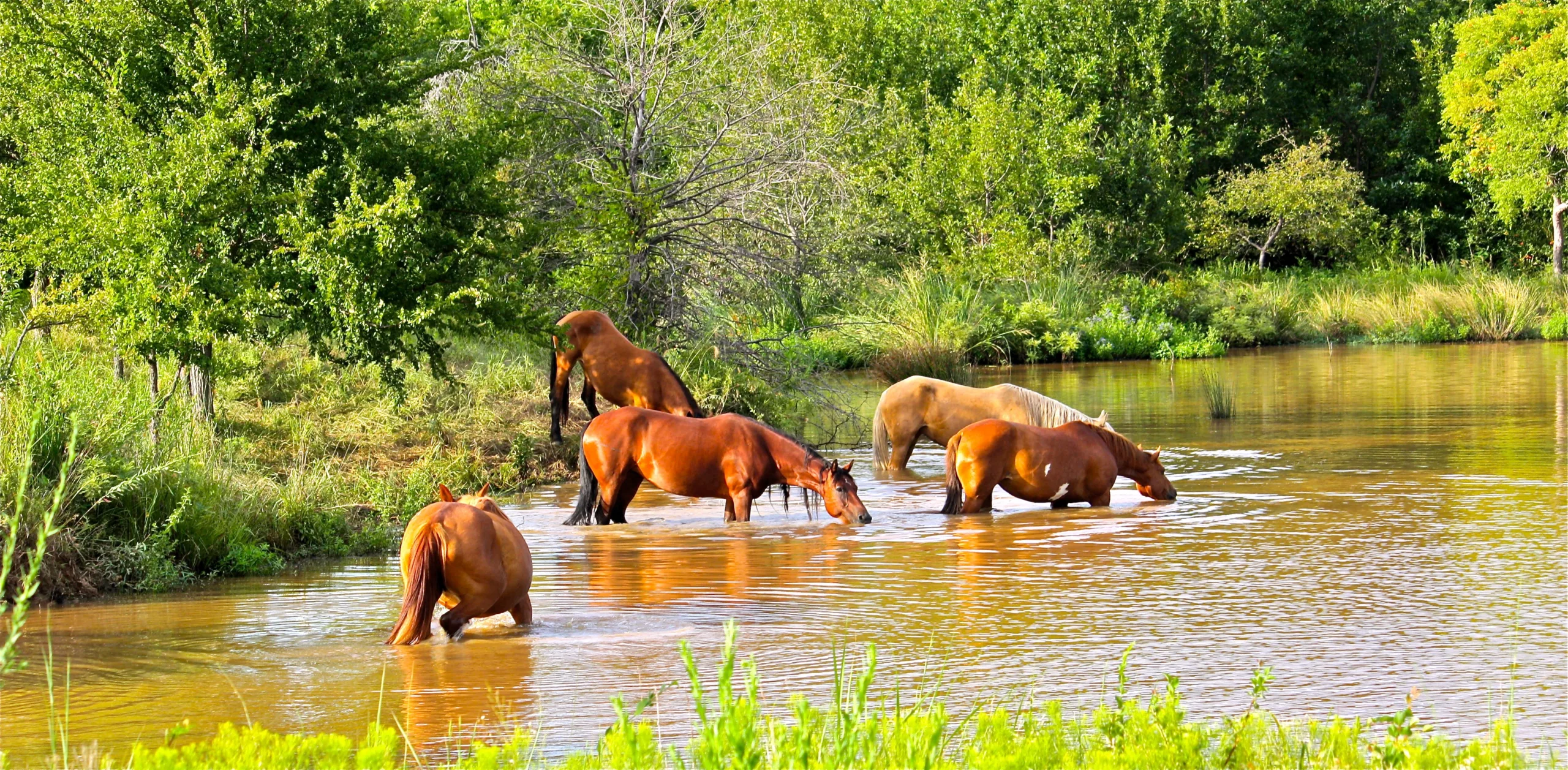
Mowdy Ranch is situated 12 miles northeast of Coalgate in southeastern Oklahoma’s hills, where the Mowdys care for wild mustangs entrusted to them by the BLM. “There are only four such ranches,” says Clay. “Two are in Wyoming, one in Kansas, and our ranch. While there are numerous other ranches that keep large numbers of BLM horses, there are only four Public Off Range Pastures where people can come to view the wild horses.
“We give tours almost daily to over 2,000 people a year. People come from all over the world. During 2024, we had numerous people from Europe, South America and Japan. The tourists are passionate about wild horses. I have to agree that there’s something stirring about the mustangs. It’s like they awaken something primeval in us, and you sort of feel the way that early people used to feel when they saw wild horses.”
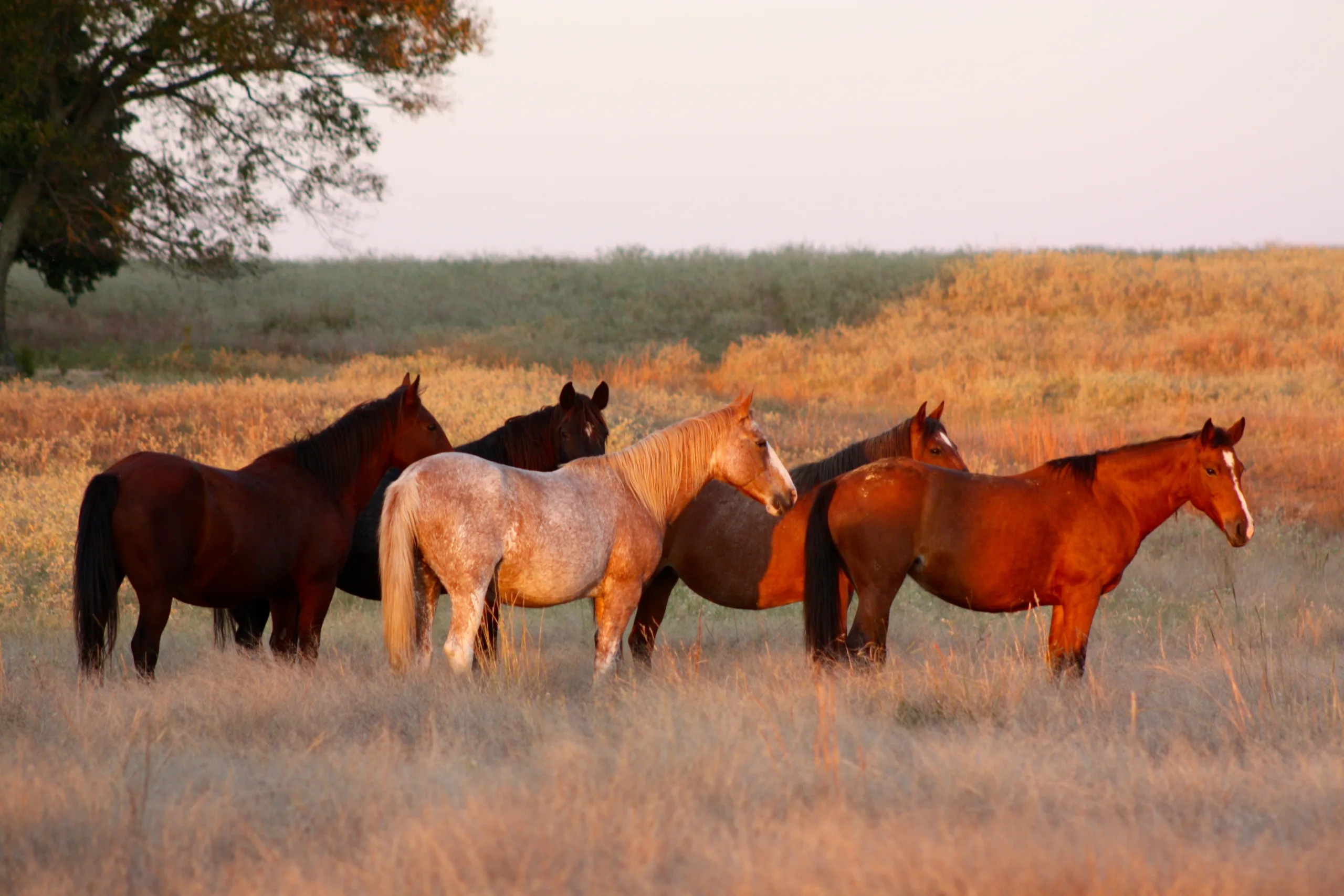
With 4,000 acres spread across wooded hills and open valleys, Mowdy Ranch is home to hundreds of wild mustangs.
“I’m a cowboy and a horse guy,” Clay explains. “Mustangs don’t cowboy well. They are easier to handle with feed and patience. Although they could easily winter on the grass pastures, we supplement their feed in winter with hay and alfalfa. We begin feeding around Thanksgiving and continue to feed up into April.”
As a BLM adoption site, in 2019 the Mowdys facilitated the adoption of almost 100 mustangs through three adoption events. Even now, the Mowdys provide food, ranch tours and hay rides on BLM adoption event days. They also have a horse trainer on location for demonstrations and free training tips.
Mowdy Ranch also offers adoptions by appointment. Their ranch herd includes adoptable yearlings and 2-year-old horses that are part of the BLM Adoption Incentive Program.
The ranch offers daily tours year-round. Guests can take open-air UTV rides for up-close encounters with the Mustangs, usually lasting about an hour. Only cell phone photography is allowed on regular tours, but two- to three-hour photographic tours give visitors freedom to shoot photos and video. Drone photography is prohibited, as it frightens the horses.
Guests can enjoy comfortable, modern options for overnight or extended stays, complete with a range of amenities. Visitors may run, hike, fish and bring their dogs. The ranch even offers RV hookup sites.
No drop-ins are allowed. All visits to Mowdy Ranch Mustangs in Coalgate, Oklahoma, are by appointment only. For information and pricing, visit mowdyranch.com, and check the site for the next BLM adoption event. For details on BLM adoption programs, visit BLM’s Adoption Incentive Program at blm.gov/programs and select the Wild Horse and Burro link.
Steeped in Oklahoma history, Mowdy Ranch remains a living home for the horses that shaped the region’s ranching legacy.