by Ashley Daily
From a foal’s first wobbly steps, its early experiences can influence how it reacts to humans later in life. One approach built around this idea is imprint training.
Imprint training is a technique that involves handling foals directly after birth, desensitizing them to human touch and other stimuli. The concept of imprinting stems from the fact that horses are a precocial species, meaning they are neurologically mature and aware from birth. It’s believed that this results in a short window of opportunity to desensitize foals while they are still in those fearless hours following birth.
The method was popularized by Californian Robert M. Miller, DVM, in the 1990s; however, some research says that Native American tribes such as the Cherokee and Kiowa performed early handling of newborn foals long before Miller’s method garnered attention. Native horse handlers would even familiarize the foal with their voices by talking to the fetus while it was still in utero.
Like many things in the horse world, imprint training can be a controversial topic. Advocates believe that imprinting will give a foal a head start in his training, helping him to become a less fearful and more respectful partner. Those opposed to the method argue that it interferes in the bonding process between mare and foal, resulting in stress for both parties.
Imprinting methods vary widely. Some approaches involve gradually introducing foals to new stimuli over the course of their first few days of life. Other methods call for an intense handling session immediately after birth.
While the foal is still lying down, the handler is instructed to prevent the foal from standing by gently holding him in place, creating submissive behavior rather than resistance. The foal is then rubbed over different areas of his body until he relaxes, and a halter may be placed on and removed repeatedly to familiarize him with the process. Once the foal has nursed and is standing, the imprinting exercises are repeated.
It is said that a correctly imprinted foal will have the same skills as a mature horse at only 2 weeks old. By this stage, the foal should be able to stand tied, tolerate handling of the feet and body openings, and be accustomed to the sensations of tacking up, the sound of electric clippers, and the rustling of paper bags. In short, you have a highly trained horse long before he’s ready to be weaned.
But at what cost?
It is taught that a foal’s acceptance of stimuli by ceasing resistance is ideal, but one study suggests that this could instead be a phenomenon known as tonic immobility (TI), an involuntary state of temporary paralysis brought on by stressful situations. Overhandling of the foal after birth is also suspected to lead to foal rejection, especially if the mare is a first-time mother.
Interestingly, a Texas A&M University study evaluated differences between imprinted and nonimprinted foals at 6 months of age. Foals were divided into several groups with some receiving no imprinting and others being imprinted during various timeframes. In conclusion, the study found that imprinting “did not result in better behaved, less reactive foals.”
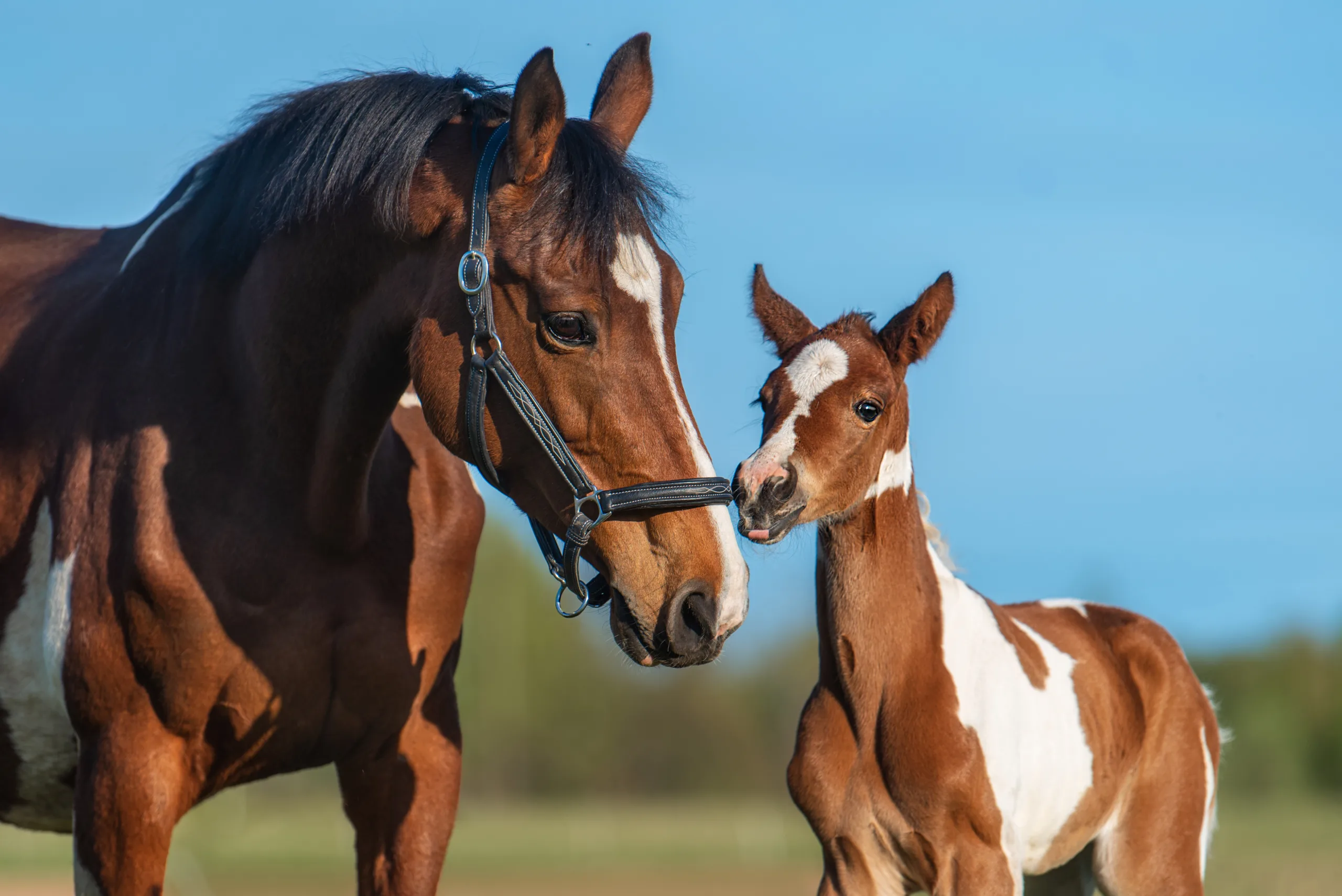
With studies questioning the long-term benefits of imprinting, an alternative approach to early learning might be better suited. Dr. Kris Hiney, equine extension specialist at Oklahoma State University, says a mare’s positive relationship with humans can strongly influence how approachable her foal will be. “If the human is interacting with the mare in a positive way, and the mare has affiliative behaviors toward the human, that is related to future behavior in their foals.”
By spending time nurturing the bond with your mare before breeding her, you will ensure she becomes trusting around humans, and in turn, she will pass that behavior along to her offspring.
Ultimately, it’s the owner’s decision on whether or not to use imprint training. However, if this method is chosen, it’s crucial to learn how to imprint safely and correctly. Learn about potential problems and don’t let imprinting take priority over the bonding process of mare and foal. It is crucial that foals nurse within two hours of birth to obtain the antibody-rich colostrum, so don’t let imprinting interrupt the foal’s attempts to search for milk.
Bear in mind that it should not be performed on the foals of maiden mares or mothers who are aggressively protective of their offspring. If you have decided against imprint training, that doesn’t mean you shouldn’t try to keep an eye on the new arrival.
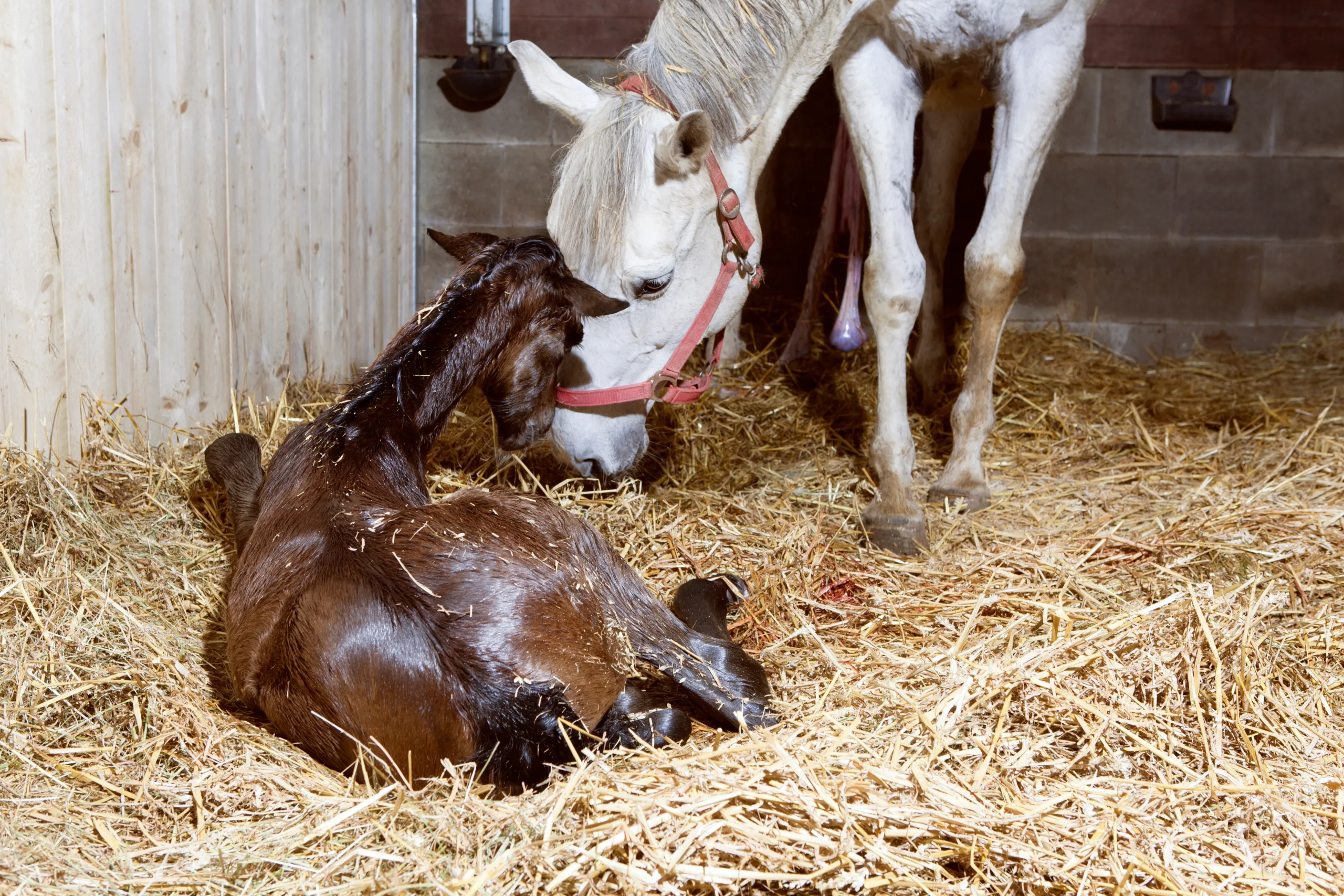
“Make sure that they nurse, that they pass meconium, that everything is going according to plan,” Hiney advises. If you are struggling with the decision whether or not to use imprint training, it might be worth considering the fact that mustangs — born in the wild with no human contact until they are rounded up and placed in holding — can become highly trained with no imprinting from humans.
Whether or not imprint training is used, careful observation in those first hours and days after birth remains essential. Ensuring the foal is healthy, nursing well and bonding with the mare lays the foundation for any future training to come.