Practical strategies to keep barns and pastures manageable all season
by Ashley Daily
As warm weather arrives, flies quickly become more than a nuisance for horses and the people who care for them. Methods for protecting horses and livestock from flies began to appear in the early 1900s, with Repel-X by Farnam, introduced in 1957, credited as one of the first insect repellents made specifically for horses. Today, fly control is available in many forms, from sprays and roll-ons to whips and feed-through products, offering horse owners an array of options. Yet despite all of these tools at an owner’s disposal, flies remain a persistent challenge in barns and pastures alike.
This persistence is due largely to flies’ rapid reproduction rates. Depending on the species, flies can lay hundreds of eggs at a time. Houseflies, for example, can lay up to 900 eggs during their lifetime, with eggs hatching within eight to 20 hours after being laid, while horseflies (Tabanidae) will lay anywhere from 100 to 1,000 eggs per batch. All fly species go through the same four-stage life cycle: egg, larva (maggot), pupa and adult, after which the cycle begins again.
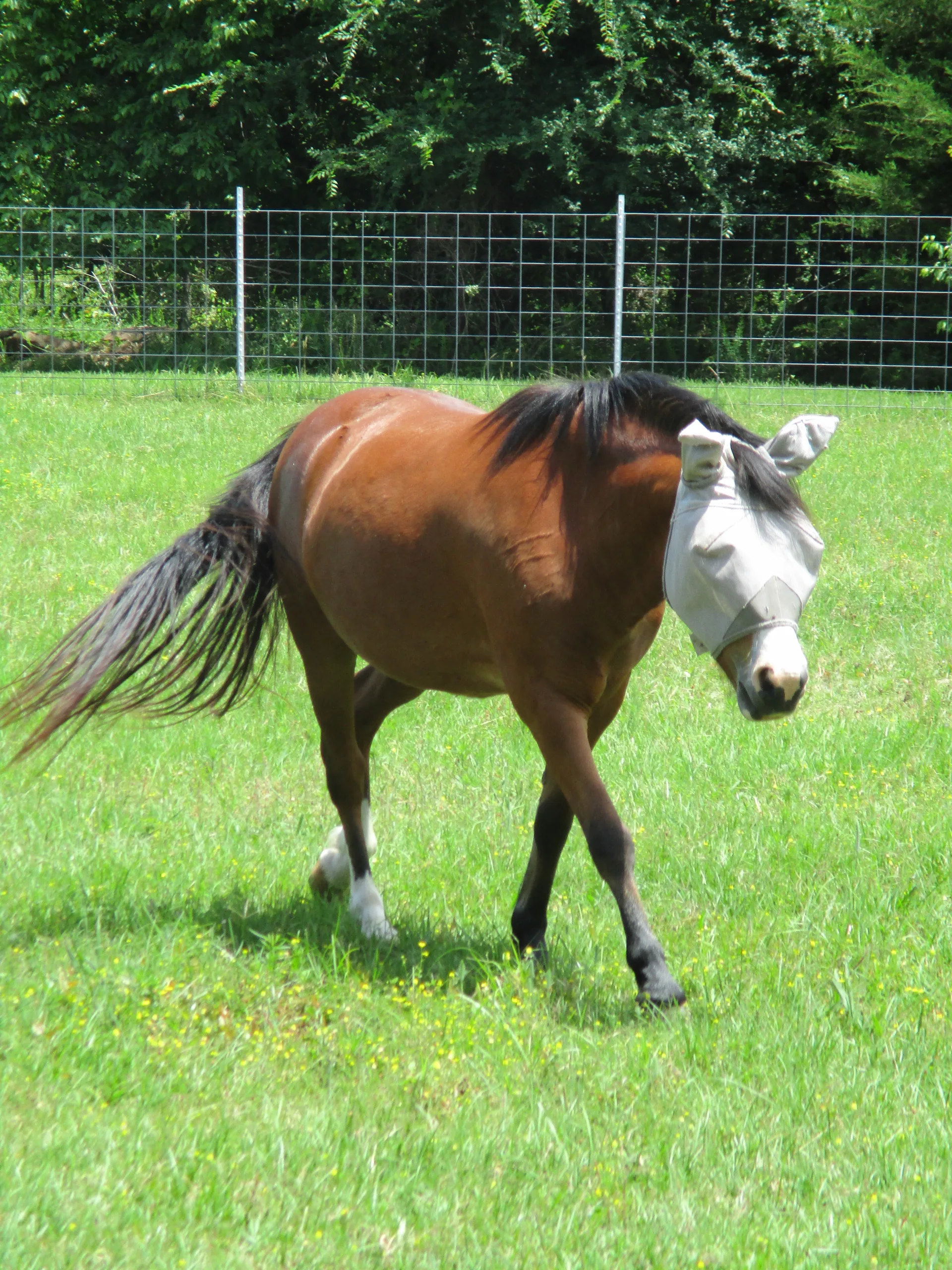
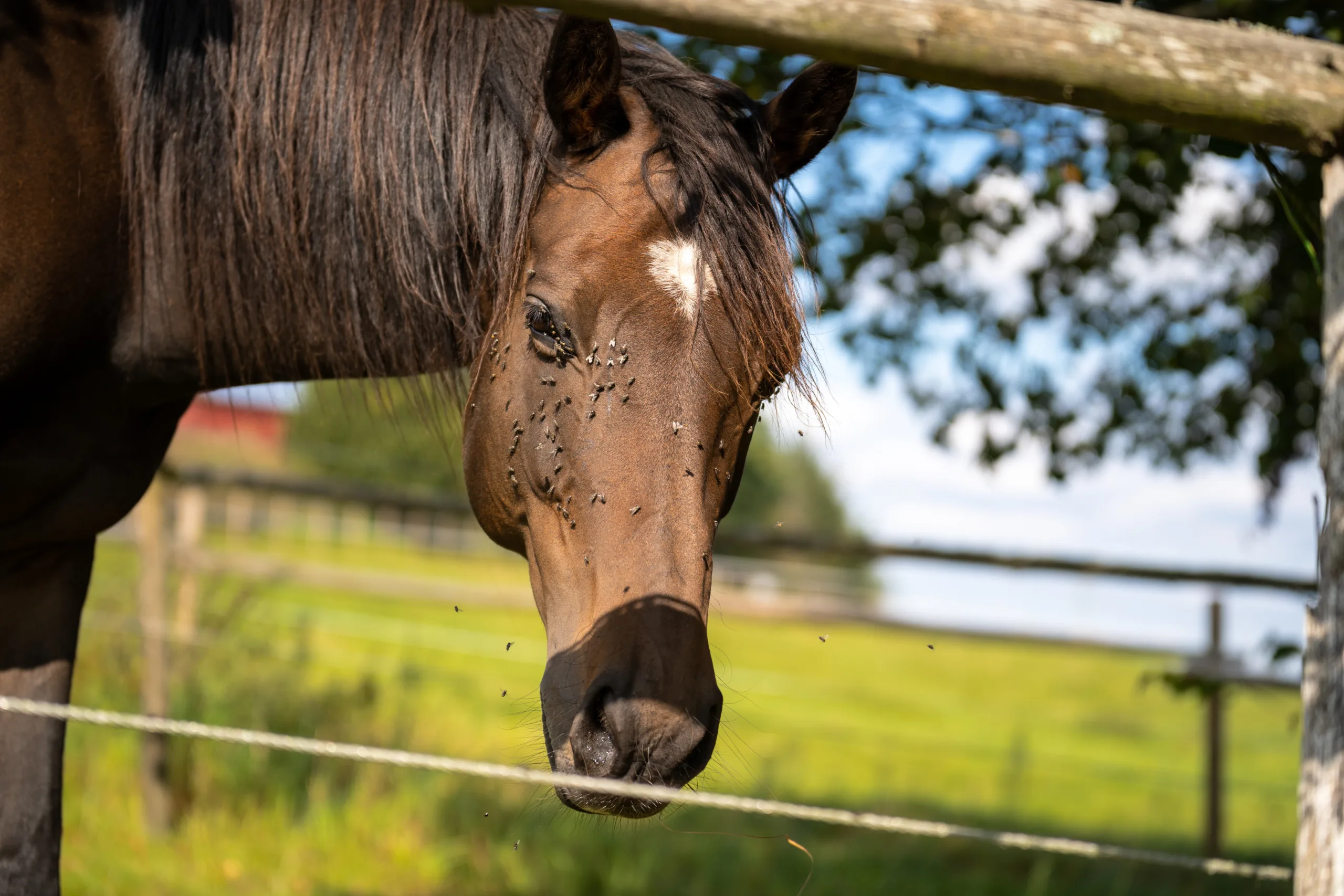
Flies are attracted to sweat, blood and secretions, causing horses to become stressed and agitated as they ward off these pests. Large fly infestations can contribute to weight loss in horses, as constant irritation interferes with normal grazing and feeding behaviors. In addition, flies are capable of spreading disease, making efforts to reduce their numbers an important part of horse management. Yet despite an abundance of advice, myths about fly control continue to circulate.
Myth: Fly spray will kill the flies that land on my horse.
Reality: Fly sprays come in many formulations, and their effectiveness depends on the active ingredients and intended use. Some products are designed to kill flies on contact and typically contain insecticides such as permethrin, often labeled as “kills and repels.” Natural fly sprays containing essential oils like lemongrass generally work to repel flies rather than kill, though some may kill insects on direct contact. Bear in mind that some products intended for cattle should not be used on horses. Always read product labels carefully to ensure the spray is appropriate for your horse and effective against the specific pests you are trying to control.
Myth: All fly species are the same.
Reality: There are approximately 18,000 species of flies in North America, though only a small number (roughly eight species) commonly pose problems for horses. While flies share basic characteristics (compound eyes, two wings), their appearance, behavior and preferred habitats vary widely. Because of these differences, identifying the specific fly species present is an important step in choosing the most effective baits, sprays and management strategies.
Myth: Using more product offers better results.
Reality: While using enough fly control product to be effective is important, overapplication can be harmful and wasteful. Excessive amounts of insecticide can cause skin irritation on sensitive horses. However, depending on the product, multiple applications might be needed, especially if your horse has been sweating excessively or gets caught in a sudden rain shower. Once again, read labels carefully, following instructions for application, and spot-test new products on a small area of skin to see how your horse reacts to the ingredients. Studies have shown that some flies, especially houseflies, are developing resistance to certain ingredients in sprays, particularly permethrin. If your go-to fly spray suddenly stops working, try a different formulation.
Myth: Fly predators will kill all of the flies on my property.
Reality: Fly predators are tiny non-stinging parasitic wasps that are typically purchased online in the pupal stage and released near fly breeding areas, most often manure piles. These beneficial insects pose no threat to humans or animals and offer a natural, chemical-free fly management option. However, fly predators only feed on larvae, not adult flies. They are also specific to the larvae of houseflies and stable flies, meaning other fly species can continue to reproduce.
Myth: I haven’t seen any flies around my barn, so I don’t have a fly problem.
Reality: Seeing few flies is an indicator of good management. However, this doesn’t necessarily mean flies haven’t taken up residence on your property. Flies may still be present in their larval stages or in hiding during cooler weather. Maintain low fly numbers around the barn by prioritizing cleanliness. Remove manure and soiled bedding regularly to eliminate breeding sites. Store feed in airtight containers to avoid attracting flies and consider hanging traps. Eliminate stagnant water, which can attract mosquitoes.
Despite the risks they pose and the annoyance they create, flies play a vital role in the ecosystem. They serve as a food source for many creatures including birds and frogs, and they rank second only to bees as pollinators. Nonetheless, it’s important to take steps to ensure these flying pests don’t take control of your property.