Story by and photos courtesy of Craig Stark, BS, CJF, DipWCF, Chairman of the Certification Committee, AFA
Seasonal changes have a profound effect on the equine hoof, and in few places is this more apparent than in Oklahoma. The state’s unique transition from cold, dry winters to wet, volatile springs creates a challenging environment for hoof health. Understanding how horses’ feet change from winter to spring in Oklahoma — and how to manage those changes — is essential for maintaining soundness, preventing disease and supporting overall performance. While a farrier is only in control of your horse’s hooves for a short period during each trimming cycle, the environment in which your horse lives affects the hooves constantly.
Winter Hoof Conditions in Oklahoma
Oklahoma winters vary widely depending on the region, but they are typically characterized by fluctuating temperatures, periods of hard freezes, and relatively dry footing punctuated by occasional snow or ice. During winter, horses often experience reduced hoof growth. This slowdown is largely driven by decreased circulation to the extremities in cold weather and shorter daylight hours, which influence metabolism and horn production.
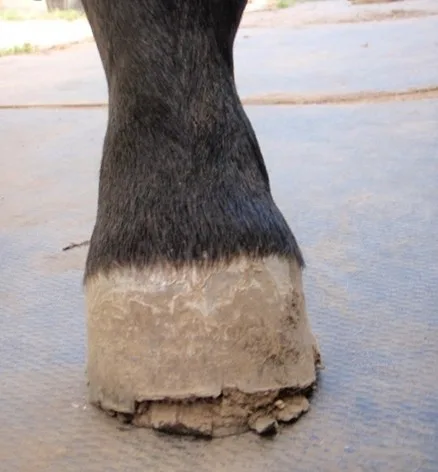
Hooves in winter tend to be harder and drier. While this can provide durability, it also increases brittleness. Many horses develop chips or cracks along the hoof wall, particularly if trimming intervals are extended or if the hoof capsule becomes imbalanced. Frozen ground can exacerbate these issues by increasing concussion and limiting natural wear patterns.
In addition, many Oklahoma horses are kept in dry lots or on dormant pasture during winter months. Reduced movement — especially in icy or muddy conditions — can further limit circulation to the feet, contributing to slower growth and reduced sole depth over time. This reduction in sole depth, compounded by frozen ground, can lead to tender feet. In some cases, leaving a little extra depth while trimming in the cold months can help maintain the horse’s comfort.
The Transition to Spring: Moisture Returns
As winter gives way to spring, Oklahoma experiences a rapid increase in rainfall, humidity and temperature. This change often happens quickly, sometimes within a matter of weeks. While warmer weather stimulates hoof growth, increased moisture dramatically alters hoof integrity.
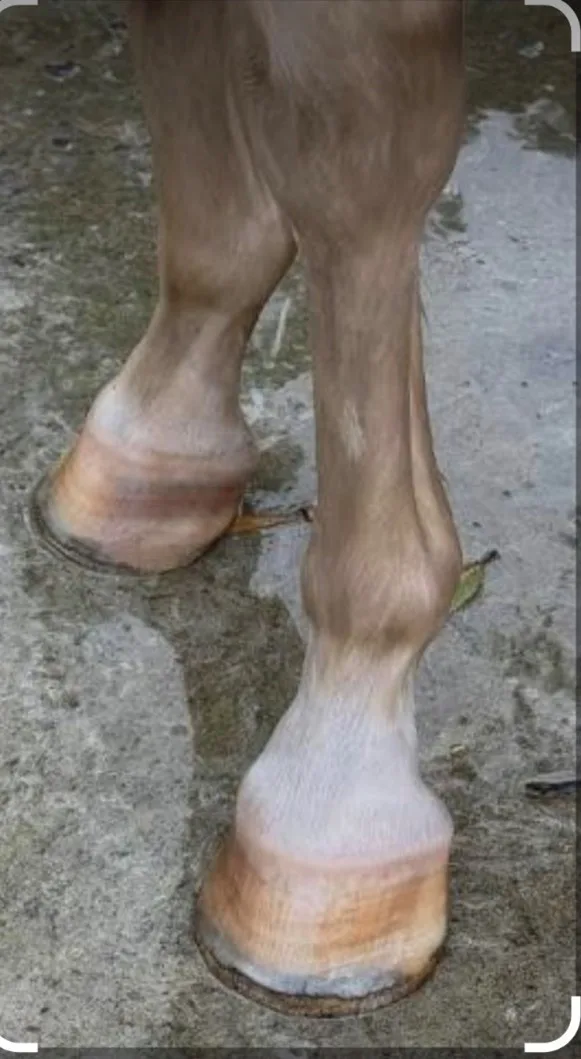
Hoof horn absorbs moisture from the environment, causing it to soften and expand. While some flexibility is beneficial, excessive moisture weakens the bonds between horn tubules. This can lead to flaring, stretching of the white line, and a greater susceptibility to separation and infection.
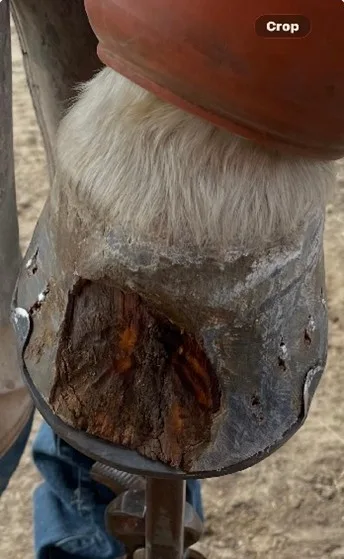
Many horses that had hard, contracted feet in winter begin to show wider, softer hooves in early spring. This expansion can place stress on existing cracks or imperfections, causing them to worsen if not managed promptly. In severe cases, the hoof wall can take on the consistency of wet cardboard, drastically reducing the ability to hold shoes for any length of time.
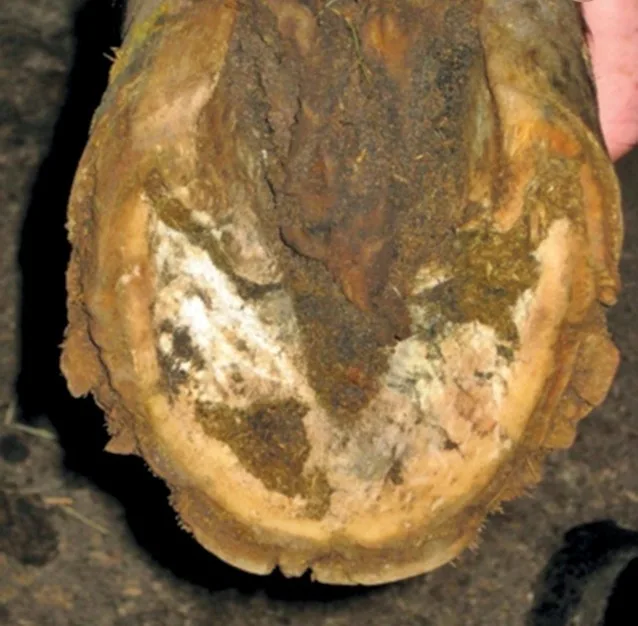
Increased Risk of Thrush and White Line Disease
One of the most significant springtime concerns in Oklahoma is the rise in hoof-related infections. Persistent mud, standing water and wet bedding create ideal conditions for bacteria and fungi.
Thrush is particularly common during this period. The frog, which may have been dry and shrunken during winter, becomes soft and vulnerable in wet conditions. If manure and moisture accumulate in the sulci, thrush can develop rapidly, leading to foul odor, tissue degradation, and in severe cases, lameness.
White line disease also becomes more prevalent in spring. The softened hoof wall and increased microbial presence allow pathogens to invade the white line, particularly in horses with flares or long toes. Early signs may be subtle, but unchecked infections can compromise hoof stability and require extensive rehabilitation. As seen in Figures 3 and 4, minor issues can quickly escalate if left untreated.
Changes in Hoof Growth and Wear
With longer days and warmer temperatures, hoof growth accelerates in spring. In Oklahoma, many farriers observe a noticeable increase in growth rate by late March or April. While this is a positive development, it also necessitates more frequent trimming or shoeing.
Faster growth combined with soft footing can alter natural wear patterns. Horses on pasture may experience less abrasion, allowing toes to run forward and heels to become underrun. This imbalance affects limb alignment and can increase strain on tendons and ligaments.
Conversely, as spring storms subside and ground firms up later in the season, hooves that adapted to soft conditions may suddenly face increased concussion. If soles are thin from winter or compromised by moisture, horses may become footsore during this adjustment period.
Laminitis Considerations
Spring in Oklahoma also brings lush grass growth, which poses a metabolic risk for some horses. Rapidly growing cool-season grasses can be high in nonstructural carbohydrates, increasing the risk of laminitis — particularly in horses with insulin resistance, Cushing’s disease or a history of laminitic episodes.
Hoof changes associated with laminitis often coincide with seasonal transitions. Increased digital pulses, warmth in the feet and subtle changes in stance may appear before more obvious symptoms develop. Vigilant monitoring of both diet and hoof condition is critical during this time.
Management Strategies for a Healthy Transition
Supporting hoof health through the winter-to-spring transition requires proactive management. Regular farrier care is essential; many horses benefit from shorter trim cycles in spring to accommodate increased growth and prevent distortion.
Environmental management plays a key role. Providing dry standing areas, improving drainage in high-traffic zones and maintaining clean bedding help reduce prolonged moisture exposure. Picking feet daily becomes especially important in spring to remove mud and manure and to detect early signs of infection.
Nutrition also influences hoof resilience. Balanced minerals — particularly zinc, copper and biotin — support strong horn growth. While supplements are not a cure-all, they can help offset environmental stress when combined with proper trimming and management. Remember when it comes to supplements, if a little is good, more isn’t always better. We may be unbalancing a feed ration with over supplementation. Genetics also play a role. Just like people, not every horse will have long, luscious hair. They are limited to what their DNA allows. A Thoroughbred, Quarter Horse and a pony can have very different hoof quality in the exact same environment.
For horses prone to infections, topical treatments or preventative hoof dressings may be appropriate, though these should be used judiciously and in consultation with a farrier or veterinarian. Do keep in mind that some topical treatments may get washed or rubbed off quickly in the wet grass or muddy turnouts.
The Farrier–Owner Partnership
The seasonal changes in Oklahoma demand close communication between horse owners and hoof care professionals. A farrier who understands local soil conditions, weather patterns and seasonal challenges can make informed decisions about trimming angles, shoeing options and timing.
Spring is an ideal time to reassess hoof care goals. Whether transitioning out of winter shoes, addressing emerging imbalances or managing ongoing issues, early intervention often prevents minor changes from becoming major problems.
Because farriers do not see the horse daily, they rely on owners to report changes in soundness or health, which allows the farrier to catch major issues that might otherwise be missed.
The transition from winter to spring in Oklahoma brings dramatic changes to a horse’s environment, and the feet reflect these shifts more than any other part of the body. From dry, slow-growing winter hooves to rapidly growing, moisture-sensitive spring feet, the hoof is constantly adapting.
By understanding these seasonal dynamics and responding with attentive care, horse owners can support healthy, functional hooves year-round. With informed management, regular farrier visits and an eye toward early warning signs, Oklahoma horses can move confidently into spring on strong, resilient feet.